Easy Ways to Interrupt a Depression Spiral

A close friend texted me this week saying, “Three things you do to get yourself out of a slump. Go.”. My answer was go for a walk, clean the house/rearrange things and to light candles. While rushed, the answer is still mostly accurate but I wanted to elaborate more on the whys behind them.


First things first, depression affects everyone differently and can manifest in a variety of ways. Personally, depression comes in waves almost like clockwork. I can feel myself slipping and before long I’m sitting at the bottom of the pit, living there for a while. Two years ago, I hit my roughest patch which consisted of regular depression naps every Saturday at 2PM (which genuinely became a concerning joke amongst friends and family), overindulging in food/alcohol and spewing self-deprecating depression jokes to everyone’s displeasure. I’ve watched friends suffer through these depths numerous times but for the first time I was miles away from the surface with no sense of what to do. I spent months in this proverbial hellscape before drifting slowly upwards. Before long, that heavy weight I’d been carrying was gone, without a note goodbye. Here is my easy guide to interrupting a depression spiral.

  • Learn your warning signs – Inevitably, if you’re experiencing depression, there’s a good chance that it’ll happen again and that’s okay. It’s normal. Like I mentioned earlier, depression can be like a wave: it ebbs and flows. Comes on in a hurry then leaves. Push and pull. While it can be scary to think that it will return, especially when you’re already feeling low, it can instead be a positive situation because you have time to prepare for the next fall. Common signs can include: sleeping too much or not at all, disconnected emotional changes, overeating or under eating, overall numbness or lethargy. 
  • Find simple tricks to give yourself joy – When you’re spiraling, there’s not much that can bring you joy or even a glimmer of hope. Thankfully, I was able to find a consistent, low-energy trick: watching weekly Jenna Marbles videos on Youtube. I have been a fan of Jenna Marbles for nearly a decade and it was easy to go ‘Oh, it’s Thursday – I bet there’s a new video up’. That simple act was enough for me to hold on to. Did I really care about the content of her videos? No. Did I routinely watch them just to get a chuckle or two? Yes. The most important part of this trick is to find something that requires barely any effort on your part but is scheduled: a show on cable, a weekly youtube video, a podcast. 
  • Create a self care kit – For the most part, self care goes out the window during a depression wave however, by having a go to kit of your favorite things, it may be enough to slow the impending tide. Whether you’re a shower or bath person, keep on hand your favorite candles, gels, bombs and scents. Another part of your kit can be productive like art supplies, your favorite book or maybe just an extra comfy pair of sweats. Scents to look for: lemon and orange for energy, lavender and jasmine for calming, bergamot and rosemary for alertness. 
  • Care for something outside of yourself – Loving others is another way to energize yourself. From plants to pets to people, being able to respond and love something can help you feel a little more connected when in the pits. My boss gifted my coworker and I tropical plants last fall that I was determined to keep alive. When my coworker left her position, she gave me her plant to take care of. Tropical plants in central Indiana? Goodluck. For the record, I do not have a green thumb and can barely keep myself alive let alone a plant. They never bloomed, but they’ve sprouted new growth and are something I’m proud of now. 
  • Try something new – Routines can be great but they can also be smothering. I crave routine and structure but once I start falling down a pit, routines make my skin crawl like I’m growing too quickly from the inside and my skin can’t hold me. When you’re feeling a funk come on, try something new. Say yes to an invitation from a friend. Take a different route home from work. Walk a new path at the park. Watch a new sitcom just to change the perspective. We are so comfortable in our own worlds that sometimes breaking the routine and experiencing something new can be liberating and cathartic. 

What worked for me may not work for you perfectly and that’s okay. The goal is to try things that you may not have considered previously if you find yourself descending the steps into the pit. If you’re fully in the trenches, these things may not work or work as well and you should always confide in someone you trust about your feelings. 


If you or someone you know is in immediate danger due to depression, contact 911. If you or someone you know is in need of support, call the National Suicide Prevention Lifeline at 1-800-273-TALK (8255); En Español 1-888-628-9454 or text “HELLO” to 741741 the Crisis Text Line.

Trichotillomania: Little Acts of Harm

You already know what it feels like to pull a hair out of your scalp. Everyone does; you’ve never had any real reason to do it, but at some point in your life, you’ve just gone for it and just grabbed an individual hair and tugged. It’s one of the smallest, most harmless ways we can examine our body’s capacity for pain on our own terms: no risk of damage, no chance of any pain that’s worse than scratching yourself with your own fingernail. Maybe you found a little thrill in it, in knowing that it won’t hurt terribly, but it’ll hurt just enough that you have to psych yourself up to do it. There’s the excitement of preparing yourself to do it, followed by a satisfying little pop of pain and a rush of relief that it wasn’t as bad as you thought it was going to be. Like pulling at the loose skin at the edge of a nail, it’s one of those small acts of damage to the self that people just do, and think nothing of.

What far fewer people will ever experience is the feeling of wanting to pull hair our of your scalp. It’s in the wanting that things get a little more complex. I learned the word trichotillomania less than a year ago. It was a uniquely cathartic feeling to realize that there was a name for this, for this seemingly inexplicable pattern of behaviors and this uncomfortable urge to pull at my own hair that I’d been trying to make sense of on my own for years.

It follows the same pattern every time. First comes the normal part: the running of your fingers through your hair when you’re stressed or anxious or thinking, or just when your hands don’t have anything better to do. Then your fingers get more precise in their movements. It starts to become apparent that they’re not combing randomly, but combing like you comb a beach; they’re on the lookout for something. Then they catch what they’re searching for and there’s a quiet little rush in the discovery: a hair that feels different from the rest of them, with a texture that marks it out from the rest. (I have completely straight, utterly textureless hair, but occasionally an anomaly will grow out of my scalp that’s thicker and wirier, with a slight wave to it and a coarse and uneven texture that just feels so interesting and so satisfying to run between my finger and thumb.)

And you have to pull it. You just have to pluck it out. You can’t just appreciate the Special Hair as it is, growing peacefully out of your head with the rest of them. It has to die.

Sometimes there’s collateral damage. Sometimes the Special Hair is hidden in a little clump of normal hairs, and you can’t disentangle it from the others, so rather than risk not being able to pull the chosen hair and loosing it forever, you just pull the clump of four or five.

It doesn’t feel good, exactly. It doesn’t come with the mad, addictive endorphin rush that is the cruelest trick of more serious, more dangerous acts of self harm. It feels like lint-rolling a coat feels. That pop of pain brings with it a pop of satisfaction, the feeling of a job well done. It just trips something in a weird little corner of your monkey brain that wants that feeling to be repeated and repeated and repeated.

And then of course, if you repeat and repeat for long enough, you start to see the damage.

In preparation for writing this, I tried to pinpoint exactly when I first started pulling. I found this almost impossible to do; hair pulling for me is such a thoughtless, unconscious act that it was like trying to remember biting my nails for the first time. I don’t think I was doing it as a child, or at least not regularly enough for it to have been a problem. I have a feeling that it must have started when I was in my mid-teens. It certainly escalated to a new extreme with the stress of being an undergraduate student, and stayed at that heightened level for the next several years. These things are very difficult to de-escalate: if you become used to pulling fifteen or twenty hairs a day, you can’t go back to just three or four.

So realistically, that’s about ten years of steadily, regularly, pulling my own hair out of my head. And for years it didn’t bother me, because for years it wasn’t visible. Until, all of a sudden, it was.

I was in my early twenties when I really started to notice the damage. I had a batch of wispy flyway hair that seemed at all times to be sticking straight up from my parting like I’d just rubbed a balloon on my head. This was where the hair had been pulled and was growing back at a different rate, struggling to catch up with the rest of it. There were patches of my hair, at the temples or at the crown, that had been plucked so severely over so many years that they were visibly thinning. Looking in the mirror, the bathroom light would sometimes shine straight through these thin patches, and my stomach would lurch at how easy it was to see my scalp underneath.

It’s like having moths in your wardrobe and not even realizing it until you notice the holes they’ve chewed in your favorite coat. You still wear it; it’s not like you’ve got another coat, but now you go about your day hoping the people you pass by don’t notice the holes in the cuffs and the hems that are so glaringly obvious to you. I don’t know if it was visible to others. But it was visible to me. I would try and part my hair in ways that were unnatural to it, awkwardly flip it over itself, just to hide the patches where it was thinnest or the fly-aways were most wispy, only for it to fall back to its natural part whenever the wind blew or I ran my hand through it without thinking. I hated it. I hated noticing new patches of thinness every day. I hated looking at old pictures of myself and seeing how much thicker my hair had once been. I began to have dreams where I woke up one morning to find whole clumps of my hair ripped out, leaving my bald scalp exposed. And I couldn’t get rid of it. I couldn’t think of a way to stop pulling for long enough to let my hair heal, which surely meant that it never, ever would.  

It got to the point where as long as I had hair it would bear the scars of this stupid, irritating little compulsion.

So guess what.

I shaved my head.

I think of it as hitting the reset button. I restored my hair to its factory settings, erasing the damage I did to it after all those years, and finally giving it what it most desperately needed: a chance to take its time, and grow.

Now, it would be irresponsible not to say at this point that there are a vast number of far, far less drastic ways to manage trichotillomania than a full buzz cut. A quick google search will take you to any number of helpful pages, full of genuinely wonderful advice on how to manage your impulses and identify what it is that makes you want to pull. I’ve been following this advice myself for as long as I’ve known that my condition had a name, and it really does make a difference. I just got to the point where I wanted it all gone. I wanted a clean slate.

I’m about four months post-shave at time of writing. I’m currently rocking a scruffy pixie situation that I’m very happy with. My hair is growing thickly and evenly. Sometimes I go looking for the patches that were most affected by the years of plucking and can’t find them. It’s quite a bizarre thing to adjust to, to suddenly have a normal head of hair after all those years.

I don’t know if this means I’m rid of it for good. I doubt it. It seems far too easy and practical a fix for such a uniquely illogical and impractical problem. But when the urge returns, if it returns, I’ll have an understanding of it that I didn’t have before. I know that I’ve gone four months now without any urges to pull my hair out, and that means I have it in me to go on indefinitely.

And if that doesn’t work, at least I know I can definitely pull off a buzz cut.

Honesty: Humility: Growth

This part of my story is pretty real and raw. This is the part I am not proud of. However, it’s important to share because even after I left John Doe, I struggled with self-identity, structure, discipline, and self control. I decided to make a few decisions that ultimately put myself in terrible predicaments and changed my life, but in some of the worst ways. I searched high and low for closure and answers, but all I found was temporary satisfaction, disappointment, and trouble.

There were weeks I spent several nights at bars, drinking heavily. I made many new friends and developed a social life I never had before. I was getting attention from people, but not all of it was positive. I decided to explore the dating scene and embark on a new adventure to “find myself”. Well I admit the alcohol abuse played a part in some, if not all, of my poor decision making. I found myself getting involved with a few people and making decisions I should not have done. I was naive and very trustworthy of people when I should not have been. They lied to me and I should have known better because I always have acted better in that sense; I have always preached to my friends about being safe and making good choices and not jumping into things without completely evaluating everything. I have always told them to think about the consequences before acting. I have failed to listen to my own advice. However, feelings and actions do not justify an individual hiding important information from a person.

I refer to these few months as me being crazy and doing things I never had the chance to do. So many people told me it was okay, and that this was normal. Now looking back, it wasn’t. Or if it was, I didn’t want my normal to be like that. I changed my behaviors and decided this way of life wasn’t for me; I stopped casually dating and became very selective. I have been left with physical scars now and life has been altered for me in ways I never thought would be. I never thought it’d be me. My advice here is never forget who you are. Try to stick to your morals and be very careful who you surround yourself with. Acknowledge that theses mistakes may be made and if they already have been, understand how you got there and try not to do it again despite the temporary satisfaction and attention.

One evening I was leaving a bar and I made one of the most terrible decisions ever, I chose to drive home. Well, that ended with me in jail for the night and with a criminal charge. I was beyond embarrassed. I did the very thing we all should never do – drunk driving. Thankfully, I was not in any accident or anything like that, but it still scared me and changed my life in many ways. I stopped drinking heavily and set limits. My advice here is clear, do not rely on substances of any kind to cope with heartbreak, depression, or grief. I know it’s harder than it sound, trust me, but this was one of the worst things I ever did and I have residual effects from it. Again, trust your friends, family, therapist to help you through hard times. Talk about your feelings.

Another topic to touch on is what I realized and came to accept and admit to. I looked back on my relationship and saw things I did that contributed to an issue, unknowingly. I realized I was going out to bars more, spending more money than I should have. I also acknowledge that listening to your partner is important and communication is key in working things out. In my recent article, I mentioned that I would ignore John Doe’s requests of being left alone when he was in a fit of rage, all because I thought that was the right way to handle it all. It wasn’t and it was wrong of me. However, being honest with yourself and others is a growing process too. I was also an enabler and turned a blind eye to a deeper issue at hand for years. Admit your faults. I will never deny what I did during and after my relationship because it was a stepping stone for me to find my peace and it allows transparency. Again, doing these things still do not give a free pass for anyone to be abusive. It is important to understand that.

I went down a path of destruction, and nothing I was doing was benefiting me. I was getting no answers. I had no closure. What was I even doing?

My decisions I made during and after my separation were wrong and foolish. I made choices and rolled the dice of life. I’m not perfect and I will admit this and the things I’ve done. I’ve used these experiences to help educate others who are struggling with coping from loss—that be of a loved one or maybe even a divorce, failing relationship, stress, etc. I was ashamed but again, it’s part of journey. It’s also to make people aware of how important it is to be honest with oneself and grow from these things. It’s a chapter in my life that has closed and left me with valuable lessons.

My advice here, is anyone trying to overcome such things like stress, divorce, separation, loss of a loved one, whatever it may be — should seek out help. This is something I never did until later. I could have avoided the trouble I got in after the separation if I just had better coping skills. My advice: keep communicating with people. I will say this time and time again, talk with your family and friends. Maybe seek out a therapist or counselor. Whatever you need to do to be safe and healthy while you heal from the wounds that life left you with.

What is just as important as healing, is being honest with yourself, learning from your mistakes, and taking back control of your life. We all have one chance at life, and we need to respect ourselves more. We are worthy of that.

If you or someone you know is being affected by abuse and needing support, call 1-800-799-7233, or if you are unable to speak safely, you can log onto thehotline.org or text LOVEIS to 1-866-9474.

You are not alone.

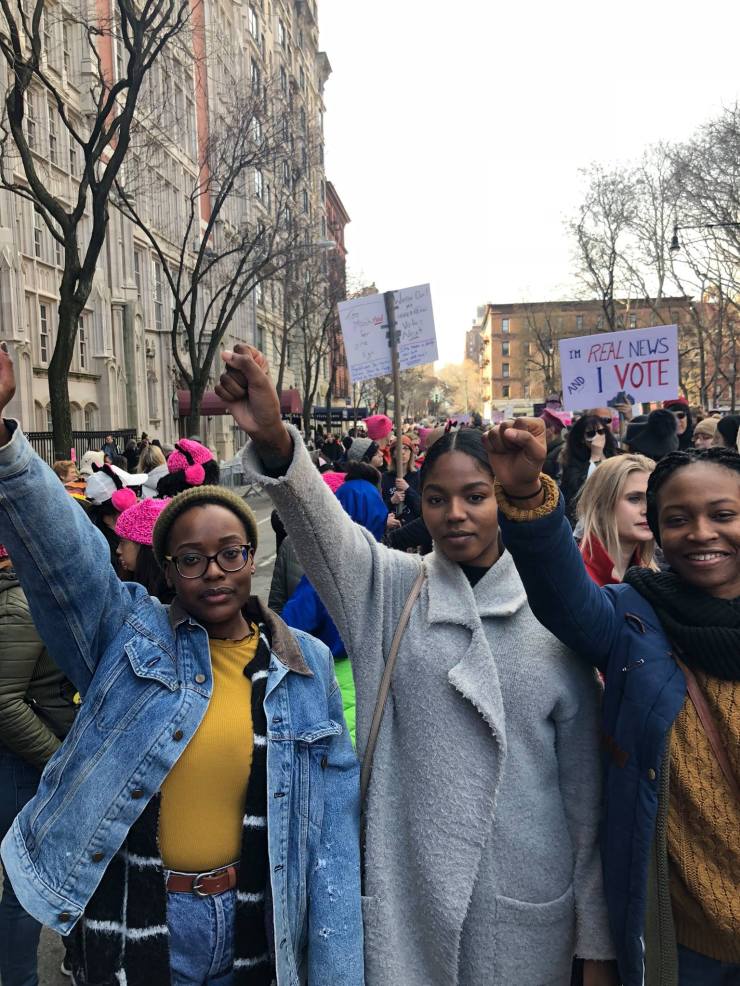
What BLM Means to Me

To aggregate my experience as a black girl in America facing the Black Lives Matter epidemic would take me several pages, but for now I will try my best to articulate how I feel in one page.

I am not a natural born American citizen; I was born in Kisii, Kenya and moved to Jersey City with my family in August of 2001, 2 weeks prior to the 9/11 attacks. Coming to this country at the time of 9/11, as an African immigrant, was a turning point in my life that introduced me to the ugliness of racism. I was only in primary school, but everywhere I went I felt heavy glares from my white counterparts, and in effect, was excluded from their circles because I didn’t look or sound like them. Fast forward to present day, 2020: the world is in an uproar from Paris, France to Hong Kong, China about the injustices that black women, men and children have been encountering via police brutality. The world seems to stand with us during this monumental moment in history, but our non-POC supporters will never feel or experience the hardship of walking around in black skin.

The Black Lives Matter movement is past due. For years, black people have cried over the loss of a father, mother, sibling, etc. from the hands of our police department, yet the world stood quiet. It took a pandemic to stop the world from self-serving and finally redirect its focus on the suffering of people who have been brought pain since the existence of the slave trade, more than 400 years ago. It’s a shame that it took COVID-19 to bring our story into the spotlight, but I’m happy that people are finally flipping the pages and willing to stand up.

Being an active part in the protests for BLM made me love my blackness even more. I felt a sense of relieve that people who didn’t look like me wanted to understand, listen and support my people. To be black in this country is to constantly walk around with a target on your back; if you are not black there is not a space for you to tell a black person how to feel. Finally, people of all nationalities are seeming to understand that, or at least try to. My first BLM protest was in Prospect Park, Brooklyn and I want to say it was nothing like what the media portrayed: I felt loved, listened to, accepted and an overall sense of great joy. However, these positive feelings do not take away the pain of the killings, beatings and harassment of all those affected during the protests.

To watch the uniformed men and women who swore to uphold the law, to protect and serve their country’s citizens, beat us to a bloody pulp fueled my anger, boiled my blood and made me hate cops. It is disgusting to witness almost daily videos of senseless killings of people who look like me for unjustifiable reasons: walking, playing, sleeping in your car, being in the back of a cop car, and countless other simple activities, those of which would never be questioned if done by someone who is not black.

However, when someone’s retort is, “blue lives matter” or “all lives matter,” I can’t say that their lives don’t matter. Here’s the thing– cops don’t wake up everyday and put on their uniform to go outside and be harassed; they made the choice to be a cop. It’s a job, not an inherent identity. Being black is something I have no control over; I cant just take this skin off and be someone else. Blue lives matter is simply a counter-movement for BLM due to years of systematic racism and brainwashing from this country. How can you wake up and tell me All Lives Matter before Black Lives when it’s people who look like me that are shot for simply existing? How many times can you recall a white person getting shot for walking down the street and holding a pack of Skittles? Black Lives Matter does not mean that no one else’s lives matter, it just means to say, “look, we are here, we want to be heard and we want to stop being killed simply for being black.

I will forever support BLM until the wheels fall off. We aren’t asking for a hand out or reparations, just equality. Black people have been oppressed and still are oppressed yet through it all, we will triumph. I will continue to support my black people. I’ll also continue to support any non-POC who stands with us during this crucial time.

I Stopped Meditating Daily and All Hell Broke Loose

Like, for real. You know how you always have good intentions when beginning a new habit, then feel kind of shitty when you fall out of it? Well… it was nothing like that at all. It was 1,000x worse — and I couldn’t be more thankful.

In a previous blog I mentioned how I was furloughed from work for three months earlier this year. During those three months I meditated every-single-day and it was magical. I felt more peaceful, present, less reactive, and more. I had unlocked my higher self and finally knew what it felt like to live in the high-vibration state I had only read about in books. Truly, it was life-changing and I was committed to doing it for at least 10 minutes daily moving forward.

LOL. How cute of me to think I could do something like that! Honestly, I’m adorable.

Now, I don’t want to blame this on going back to work because at the end of the day, it’s my responsibility to keep up a personal habit. However, I am a Taurus and would like to take a moment to base my entire personality off of my zodiac sign.

*ahem*

Tauruses thrive in comfort and are very stubborn. Meaning, me going back to work after being at home getting my mental shit together three months prior = recipe for disaster, baby! I got back to work and still managed to get my meditation in for the first week or so. But you know how it goes, it only takes missing ONE DAY to get completely thrown off balance. For me, anyway. Going back to working 40 hours a week, I would come home, veg out, crash, and do it all again the next day. Then on my days off I was in such a tizzy I honestly didn’t know which way was up!


We can’t always change what’s happening around us, but we can change what happens within us.

Andy Puddicombe, Headspace co-founder

About three weeks ago I was at the gynecologist for a yearly check-up. “How are you?” she asked. My mind swelled with thoughts which sent me into fight-or-flight mode, and of course I chose to fly. “I’m fine…” I gurgled.

“Lindsey, I don’t like that answer. How are you really?”

Here’s a mental image for you: there I was, lying back in my chair, hospital gown on, feet in stirrups, bracing myself for a pap smear, having a mental breakdown at the gyno. No better place to cry while your baby maker is on full display, I guess.

I went on to explain to her the mental struggles I was having the past month (even though I have 27 years worth of grade-A content for her!). How I was doing extremely well during my months off work, meditating daily, working to become a LIFE COACH… I felt so unworthy and small in that moment. I finally cracked as she told me I have to stop trying to be the one to save myself, that I can get professional help and that is o-k. All the work I’d done earlier this year barely scratched the surface, but I’m glad I was able to etch off that top layer.

She discussed the medication route as well as the therapy route, which I excitedly chose to do both because I needed help ASAP — and still do. The noise in my mind gets so loud sometimes I feel like my ears are going to bleed.

“Why didn’t you do _____ today?” “If you don’t get the dishes done your ENTIRE apartment will stink.” “You do know you’re a failure because you’re not using your college degree, right?” “Why didn’t ____ laugh at my joke earlier?” “Are you being present in this moment?”

“Are you listening, Lindsey?”

“Hello?”


It’s loud. It’s so earth-shatteringly loud in my head and I know I can do better. I can BE better. I am so thankful for getting out of the loop with my meditation, because that breakdown at the gynecologist saved my life.

I’ve been taking anti-depressants since that day and have already had my first therapy appointment. Since that day, I’ve been setting aside time for ME to meditate, read a good book, or do absolutely nothing. There is nothing wrong with taking medication if it helps you operate in a “normal” way, and I can happily say I’m already feeling much more balanced since I started. Having a day off and putting away my phone, doing nothing is completely fine. Needless to say, I’m chomping at the bit to read this again in a year and give myself a huge pat on the back for all the progress I’ll have made.

If someone can’t respect the time I take for myself, they don’t deserve to know me in the first place.

Besides, I’m a Taurus. And I do whatever the hell I want.

Making a Drag Queen: Euphoria MarxxX

Who is Euphoria MarxxX? A millennial drag queen that’s ready to shake up the political world? Most definitely. Someone ready to question the norms of society and how we view politics? Absolutely.

I met Kyle/Euphoria nearly four years ago while we were still bright-eyed, bushy-tailed seniors in college, studying abroad in Aix-en-Provence, France. We connected quickly thanks to our shared midwestern roots and a dark sense of humor that could make anyone squirm. We reconnected over zoom this week to trace the path from Aix to drag. This is her story.


Part One: Studying Abroad

B: What made you want to study abroad?
E: I really always wanted to. I wanted to study abroad in high school, but I thought that if I went then that I’d miss out on something. (Hello FOMO!) Look how great that turned out for me! When I went to college, I thought that maybe it was the best time. I pursued a Bachelor of Arts which required 12 hours of a foreign language. I decided my sophomore year that I would complete the entire requirement in one semester abroad. I’d taken french in high school so I knew I wanted to go somewhere french speaking. It worked out perfectly.

B: What was that experience like for you?
E: It was amazing – I want to go back so badly. There were obviously ups and downs, but overall it was such an amazing and life changing experience. It was culturally enlightening, we built friendships and had this whole experience together that no one else but our group had. We picked up our lives, moved across the world for six months, became friends for six months and then moved back to the States. It’s such a weird concept.

B: What about a favorite or least favorite memory?
E: I loved going out with our group in general. I loved going out and experiencing that social environment of living in a different country where everyone is speaking another language. It was definitely a culture shock. I loved our spring break trip – that will always be at the top of the list [read more about that here and here]. Except Bruxelles – nothing good happened there. As for least favorite, I once got on a bus to Bordeaux and our friend didn’t make it in time; I was horrified. I didn’t have any internet connection or a working cell phone, thinking ‘what am I going to do?’. I was honestly afraid that I’d go to this city and never make it back home.

B: If you could do it again, what would you change?
E: I would say that I’d want to go out and experience life more, but I feel like we did so much of that. We were always getting Crêpe à Go Go or pizza from Pizza Capri in town. I wish I would have stayed longer. I only stayed a week or two after classes were done so that I could be home to walk at graduation. If you’re thinking of about studying abroad, just do it. Don’t think about it. Figure out how to make it work and do it. It was such a liberating experience, even with the shitty parts I loved it. I look back on it so fondly now.

B: What was it like returning to Missouri after studying abroad?
E: I was going through a sort of transformation as a human being while studying abroad, I think. Right before leaving to study abroad, I was dealing with the death of my grandpa, the break up of my engagement and my ex’s mother passing so I was dealing with a lot emotionally. When I came back from studying abroad, I hadn’t really dealt with any of it yet, so it was a weird time. Within a year of coming home, I came out as gay. Around this time I started having a rift with my family because of their political views and homophobia. I decided to not deal with that sort of view or attitude in my life anymore. After I graduated college, I lived at home for maybe a month and then found a new place to live and moved out. That was one of the best decisions I’ve made, but coming back home was definitely hard.

B: How did your life/perspective change after studying abroad?
E: Studying abroad definitely made me a more liberated human. I felt like more of an adult, like I could adapt or figure out anything I put my mind to. I felt like we were in such precarious situations sometimes and we would just figure it out – even with the language barrier. We were kicked off the bus on the side of a mountain and still made it home. I think that when I came home I decided that I wasn’t going to settle for unhappiness anymore. Had I not studied abroad, I truly believe it would have taken me longer to come to terms with who I am. 


Part Two: Center Stage

B: When did you first become interested in drag?
E: I didn’t become truly interested in drag until February of this year. When the pandemic hit, my boyfriend Josh had just moved in with me and he’d always tried to get me to watch RuPaul’s Drag Race. Watching the show really changed my perception of what drag is. I saw how revolutionary it was and how it questions the gender binary. For me, I had never been able to express femininity and this was an outlet for me to explore that. It started off as kind of a joke – just doing it for fun. But I really didn’t want to half ass something, so I started spending more time practicing it. I started to think, ‘Ok, what can I do with this? I’m in quarantine, but how can I still reach people?’. That’s when I started exploring the idea of political drag. Drag queens have always been the torchbearers for political revolution, especially for the LGBTQ community. They were the ones who stood up to the police at Stonewall and they’re the reason we celebrate pride and it’s so important today to not forget that. I started thinking of how I could still contribute to this political movement, even while social distancing. I decided that I’m going to interview political members while in drag. I want my community, the community I’m surrounded with, to appreciate this as an art form of it. It’s creative.

B: How does it feel to be doing drag in such an intense political climate?
E: It’s given me some anxiety for sure. Even just by announcing to the world that this is what I’m doing, I’m obviously alienating myself from people who may not agree with this. I have to keep reminding myself, ‘what am I doing this for?’. I want to question the norm and I want people to do that as well. It’s very liberating but also a little bit scary.

B: Does the popularity of RuPaul’s Drag Race give you any extra security – knowing that drag is in such a public space now?
E: I do think it helps. RuPaul has said numerous times on the show that the world would be a better place if more people did drag, and I believe that. She also says don’t take yourself too seriously. In this interview the runway is executive realness. I’m wearing six inch stripper heels, a vibrator necklace and there’s an eggplant emoji in the background. It is so ridiculous. That’s what I have to remind myself; not to take myself too seriously which is something I do often.

B: Who are your drag influences?
E: One of my all time favorites – despite her diva moment – is Alaska Thunderf**k 5000. Then it’d be Naomi Smalls, Kim-Chi, Katya Zamolodchikova and Violet Chachki. The first season I watched was season 4, which was in 2012. One of the challenges on the show was to do a presidential campaign, running as the first drag queen of the United States. So many of the contestants said, “I just don’t associate drag with politics”. To me, everything about drag is political. Everything. 

B: What is the future of Euphoria – what is the end goal?
E: Right now, I’m trying to not set expectations. I think that’s something that gave me a lot of anxiety when I first started. When I went public with this, it was ‘oh now there’s an expectation’. My ultimate goal would be to inspire or to empower anyone that I can. I’ve had one person reach out about me going public with my drag saying that it empowered them to start experimenting with drag which is amazing. At the end of the day, that’s what I want. I think our social media presence is more impactful than people realize – I didn’t realize it until this experience. 

Follow along on Euphoria MarxxX’s journey on Instagram

Watch her first political interview with 2020 Candidate for Congress Maite Salazar

My Sobriety Story

I wasn’t sure if writing this article would be too taboo. I’m still unsure if it’s a great idea to share such a personal story to the world. However if I had been able to find and article like this one 3 years ago, I could have recognized my need for a change sooner. I could have done less damage to my body. I could have saved myself from countless nights of panic attacks and depression. I could have stopped myself from ruining friendships and lowering my own standards. I could have, but I also might not have even opened that article.

You see, addiction is not easy to admit to. It’s even harder to recognize how helpless you are when you’re using. If you aren’t ready to accept it and start making changes, you won’t. I hope that my story can reach those who were struggling like me: in between acceptance of having a problem and readiness to make a change.

My story begins in high school. I was new to the public school, a transfer from the Catholic middle school in my town. I have zero bad blood with my Catholic school classmates, but I never felt like I fit in with them. I got “yellow slips” and lunch detention for wearing zip-up band hoodies or too many bracelets to school. I’d skip class to go to pop/punk concerts and I wore way too much eyeliner. I was the only “emo” kid in my grade! Although I had some friends, I hated feeling left out. But hey, middle school sucks no matter what, right?

Anyway, at the public high school I only had one friend to begin with (Hannah-still my best friend today) who then introduced me to her group of friends. I fit in with them even though they didn’t go to concerts or shop at Hot Topic. It felt so incredible to find friends who liked me for ME, behind all the eyeliner and under my long, straight bangs. These were the people who gave me confidence. They were also the people who introduced me to whiskey.

Now don’t get me wrong, I’m not at all placing blame on my friends for my drinking problem! I didn’t have to drink with them. I never felt pressured to do it. I wanted to drink. This new world of social opportunity was at my feet. If I drank, I no longer felt uncomfortable to meet new people, to make more friends. If I drank, I was invited to parties and could create many hilarious stories with people that I never would have spoken to without alcohol involved. Liquor was my savior. It was my solution to feeling outcasted. Until it wasn’t.

In high school, I drank every weekend, but so did everyone else! I blacked out and vomited the entire contents of my stomach more times than I could count. I got into several fights with my friends, all of which were instigated by me (sorry, guys). This was destructive behavior, but I was young and carefree! I didn’t think I had a problem.

In college, I joined a sorority to make friends (hello again, social anxiety), which brought me to fraternity parties and “keggers” almost every Thursday through Sunday. On week nights, it was Margarita Mondays or Twisted Tuesdays or Wasted Wednesdays. Any celebration, loss or heartbreak was a reason to drink. I didn’t think I had a problem.

My Junior year, I studied abroad in the South of France. This was when my drinking started to escalate. I was only 20 for half of the year, but I was legal in France! I remember my first night there. I arrived in Aix-en-Provence around 10 A.M., had a panic attack immediately in my teeny tiny dorm and fell asleep. I woke up to a knock on my door. A friend that I met while getting my visa in Chicago was standing outside of my dorm! He coincidentally was placed in the dorm right above mine, and asked our program coordinator if I had arrived yet. I couldn’t believe he found me! Then he said those magic words, “wanna go get a drink?” I was elated! Again, alcohol had been my savior. He and I found what later became our favorite happy hour spot, La Grenouille. In our classes, we made more amazing friends and our nights were always spent out on the town, drinking. At one point, we started getting large bottles of cheap whiskey, sharing them, then smashing the empty bottles on a fountain. Later on, I got a large bottle of whiskey for myself to finish and smash (although I was never strong enough to really smash it and had to have one of my guy friends do it for me). Blacking out became the norm for me. I always wondered why my friends didn’t black out every time we went out, but I assumed it’s “because I’m smaller” or “I don’t eat enough” or “maybe their tolerance is better than mine.” I’ve come to realize now that I was out-drinking most of them every night. I started to think that I had a problem, because I had gotten myself in many awful situations while blacked out (i.e. getting very close to being arrested in Prague for peeing in the middle of a street and then arguing with the cops) and I started feeling worse and worse after every binge. However, I still made excuses for my drinking habits. I didn’t think I had too bad of a problem yet.

In 2016, I graduated with my BA and had no idea what to do next. I interviewed for one job, didn’t get it, then decided that graduate school was my step. I got accepted into Trinity College Dublin, and off I went to live in Ireland for a year. Some of you may not know this about Dublin, but it’s pretty well centered around “pub life.” God, did I love pub life. For the first 6 months, my life was centered around getting my school work done and when I could drink next. Every trip I went on had drinking tied into the itinerary: sangrias in Spain, winery tours in Italy and France, brewery visits literally anywhere. I made sure I did a pub crawl in every country I traveled to, and of course, I blacked out in all of them.

The latter half of my time in Dublin, I was incredibly depressed. I didn’t feel homesick, per se, but something in Dublin didn’t feel right. I made incredible friends there, who I still talk to today, and enjoyed my graduate classes and loved writing my dissertation. Dublin had everything I could need to make me happy, yet I was so broken and sad. I decided to try to drink less. The hangovers were terrible and the “hangxiety” was insurmountable. So I tried to quit drinking. However, when I didn’t go out drinking, I felt lonely and as if I couldn’t hang out with anyone. So I started binge drinking again. My blackouts were so terrible during that last half of my year that I did and said things to my closest friends that I never would have done if I were sober. My drunk alter-ego had it out for me and seemed to want to ruin my life. I realized that year that I could not just have a drink or two with my friends. If I had one drink, it was game over. My solution had become my enemy. I knew I had a problem, but I didn’t know how to fix it.

After I finished my dissertation, I knew I had to leave Dublin. I was too depressed and wanted a fresh start. I moved to New York City because, why the hell not? Unfortunately for me, I didn’t think that my problems would follow me wherever I went.

My first year in NYC, I made a friend who drank like me. She’s still one of my best friends today. I loved that she also went out on the weekends with a mission: to get fucked up. The first night I went out with her, I blacked out, fell in the middle of a busy street, and woke up in her bed in China Town. She didn’t judge me! We ordered food and I got a cab home that evening. The difference between her and I though, is that she doesn’t really black out. She can tell when it’s time to slow down, drink water, eat something, or stop drinking for the night. I, on the other hand, simply cannot. That year, I consistently depended on her to take care of me, whether I realized it or not. She got me cabs home, ordered me food, took drinks away from me…I’m sure she even had to lug my dead weight around a few times. She saved my ass too many times, and even though our friendship began with drinking, I’m incredibly grateful that it didn’t end there.

In that same year, I got a job teaching English to speakers of other languages. I was so excited to teach and came prepared with lesson plans on hand for the first two weeks. Then I realized, my students didn’t really care to learn about grammar. They already knew how to speak enough English they needed and were only taking the course as a requirement from the state. So I stopped caring. I started showing a lot of movies and reading articles from the NY Times. Eventually, I started letting my students out of class earlier and earlier so I could meet friends at a whiskey bar around the corner and get drunk. It got to the point where I would let let them leave after 2 hours, get a six pack of tall boys from the bodega downstairs, and drink and them in my classroom. I felt defeated. My job was useless. I wasn’t using my degrees or any of my skills. My brain hadn’t been stimulated for at least 6 months. I figured, why not just get drunk every night? I knew I had a problem, but I admitted defeat and didn’t want to change. I assumed that drinking defined me, and I couldn’t fathom my life without alcohol.

For some reason, in the midst of my depression, I thought that getting a new job, an important job, would fix it all. I got hired as a second grade teacher. I never wanted to teach elementary school, but I knew it was important, so I took the job and threw myself into it. My pay raise allowed me to move to a one bedroom apartment in the East Village. The first night I stayed in my new place, a Wednesday, I had a friend come over to drink wine to celebrate. I had to teach a bunch of 7-year-olds in the morning, but I assumed I’d stop after 2 or 3 glasses. Like always, I didn’t stop. I drank 2 bottles of wine and blacked out in my bed. My alarm went off at 5 A.M and I rolled into the school with the worst hangover ever (actually, let’s be real, all hangovers are the worst) and still smelling like alcohol. After that day, I knew I couldn’t drink anymore on weeknights and needed to try to control or limit my drinking.

Remember that friend of mine that drinks like me? Well, she told me one night after that incident, at a bar, that I needed to try to cut myself off. We gave me a limit of 4 drinks. After the third drink, I always said “fuck it” and would sneak a shot or two away from her so she didn’t know I was over my “limit.” Since the 4 drink thing didn’t work, I tried many other ideas: only drink beer or wine, only drink dark liquors, only drink light liquors, drink a glass of water after every alcoholic drink, eat A LOT before going out, cut off drinking at midnight. None of these ideas worked. I was back into my depression and I had panic attacks every morning like clockwork. I was paranoid that everyone hated me. Then, I started hallucinating when I drank. One morning after a night out where I planned to stay sober, I woke up in my own bed with no recollection of how or when I got there and I realized I had had enough.

This was December of 2018. I joined a program for addicts and alcoholics. I had my first sober christmas since I was 14. It was horrible, but I felt proud. I relapsed on NYE back in New York City, but that champagne toast was my last drink.

My sober date is January 2nd, 2019. I have over a year and a half of sobriety under my belt. I hated being sober for the first 9 months or so, struggling to socialize and deal with emotions that I never let surface before. I have a therapist now that I love and I’ve been working on how to be myself, my best self, without alcohol. I still crave a drink sometimes, but I know that drinking again will be my downfall. I feel so lucky to have gotten the chance at a sober life at such a young age, and I never want to go back to my old ways.

Alcoholism doesn’t always look the way you picture it: homeless, jobless, dirty and panhandling with a bottle in a paper bag in hand. Alcoholism can look like a harmless 20-year-old going to brunch or having a night out with friends. If you suspect that you might have a problem with alcohol, you probably do. The sooner you realize it and make a change, the better. However, it’s never too late to start over and drop the bottle for good.

Here’s to being sober at 26.

___________________________________________________________

Universe,

Grant me the serenity to accept the things I cannot change,

the courage to change the things that I can

and the wisdom to know the difference.

Warning Signs

If you have read my previous article, you were made briefly aware of my experiences with domestic violence with “John Doe”. I never will give his name. This is solely for awareness purposes. I brought up certain things that cannot and should not be tolerated in a relationship as they will lead to inevitable abuse of some form. As much as I would LOVE to jump to the happy, joyful life I live now, it’s just not realistic and frankly not appropriate.

It is important for me to dive a bit further into specific situations that occurred so that I can shed some light on the reality of being an enabler; furthermore, providing people, especially women, the tools to recognize the warning signs. It is important to know that due to certain things I went through, my brain has wiped some of them from my recollection. And it took me awhile to accept that and understand why it’s OKAY to not remember everything, it’s just apart of my experience.

❗️ I also must make known some content will be graphic and might be triggering to some people. Proceed with caution ❗️

Warning Sign One ⚠️

Consistent lying and hiding things


This was an early on sign I was too young to decipher. He had a need to do drugs (marijuana, etc) and I was ultimately the one thing standing in his way. I went against my gut despite him hiding the act behind my back and finding out from one of his friends that he never stopped, nor intended to stop. I will later down the road expand on my opinion about addiction’s effect on mental illness. Ignoring this sign led to poor money management, risking job opportunities, further damage to his already fragile mental state, and opening the door to future lying.

Warning Sign Two ⚠️

Never following through.


Time and time again, whether it was after a rage outburst or getting caught in a lie, he would always apologize and say he would do better.

Things would go so well for about a week, then we’d be right back at the drawing board. A time where this was very prominent was when we discussed counseling or therapy. His lack of consistency in an effort to better himself would often result in outbursts of rage and emotion.

Unfortunately, nothing we had planned to help solve this issue was followed through. It is important to acknowledge this behavior because it will lead to both people lacking trust and ultimately, ignoring it will lead to enabling the abuser. I was a textbook enabler. I kept believing him and saying, “Maybe next time he’ll mean it and do something about it.” It never happened.

Warning Sign Three ⚠️

Verbal aggression, extensive cursing, & name-calling.


There were times in our relationship, and outside of it, when he would choose to yell and make a point that everyone in our apartment building should hear him. Within the yelling, there would be name-calling and total disrespect for me as his girlfriend/wife. I will admit that there were times when during an argument that I should have left him alone and walked away, but I chose to stay and try to talk it out. It never ended well for me. I ignored his personal warning signs in order to try to solve our problems. That was wrong. However, I believe there is no excuse for verbal or emotional abuse. Ignoring or making light of aggressive yelling and name-calling led to just that – verbal and emotional abuse.

Warning Sign Four ⚠️

Destruction of personal property.


This was also an early warning sign and I chalked it up to him being an angsty teenager. There were several times where this progressed, and also what I personally believe led to the physical abuse in the end.

There was a specific time where he explained to me he got mad at his parents and he punched a hole in his wall. He hid the hole behind his clock. I never told his parents. I never thought it’d happen to me or with me. Well, it did. We would argue, and it would escalate to him punching a hole in our first apartment. I had to lie to the complex and tell them he fell and that’s what caused the hole. One time, he totaled his car and when we went to get his belongings out of it, he punched a large dent in the hood of the car.

Another instance, which made me scared for my safety, was when we got into an argument while I was away from home, and he went into our garage and took a knife to everything that was cardboard and paper and shredded it. He also took my box fan and demolished it. Before I got home, after he apologized for whatever it was we argued over, he told me not to go into the garage because he did something he was not proud of. Well, I went into the garage and I was in utter disbelief of the damage. I never told him or brought it up.

The final time this happened was when we decided to try to work things out before we called the divorce final. We came back after a night out and we got in another argument. He became violent and shoved me. He then threw a picture frame at me and it shattered, destroying the precious contents inside – my uncle’s obituary. That is when the police were called by a listening neighbor.

But again, I chose to ignore this and clearly, I should not have. This is toxic behavior and ultimately led to physical abuse.

Warning Sign Five ⚠️

Total disregard for human life.


Some will argue this is a characteristic of sociopathic tendencies. I am not a medical professional so I cannot draw any conclusions or assumptions. I can only share what I experienced. This began, not early on, but about the last 3 years of our relationship. We would be driving and when cars would cut him off, or maybe just not drive properly, he would make a point to see if they were elderly. And if they were, he would say something along the lines of, “Thank God you don’t have much time left because…” And those words would either be introduced with, or followed by, yelling and cursing, then aggressive driving.

Never in my life would I think that those ideas of his would trickle into my personal family life.

In 2017, my grandmother passed away. This was one of the hardest things I ever had to deal with. However, what was very important to me was that she saw me get married, which she did in 2016. After our separation in 2018, he made a remark on social media that involved my grandmother. It’s honestly burnt in my brain…

Well at least her grandma got to see her marry before she croaked, so I guess that means she wins lol

John Doe

The disrespect and disregard for human life, my grandmother’s life, was a big sign. I was doing the right thing at that point, though. I was already gone and we had nothing to do with each other at that point.

Warning Sign Six ⚠️

Physical changes in appearance when in a rage.


This is probably the biggest sign I had that I honestly could not ignore. I just lived with it. This is a description of what I saw when he would have a rage outburst. This is a combination of mental illness and lack of self control.

Again, his mental illness was not a contributing factor to why I left. It was the lack of care on his end to do something about it despite his family’s extensive efforts.

It was almost like you’d see in a movie where a person would transform or morph – like the Hulk. When he got uncontrollably angry, his green eyes would turn black, his forehead would throb and you could see his veins. He would get this side smirk where the left side of his face would twitch. He’d develop this condescending laugh/chuckle. His fist would ball up. He would grow almost, it seemed, in size. He would pace around, shoving and throwing things. At times, if he was angry with himself, he would punch himself, pull his hair, cry. I was always so scared. For himself and for myself.

If this was a result of mental illness, it was clear he was suffering. But there was nothing I could say or do to convince him to get the help he so needed. I cared deeply for him and his health. Everyone who knows me, knows this to be true. I do not judge a person because of this. But this falls within a warning sign because, I never removed myself from the situations, I stayed and tried to calm everything down. It always ended with him saying, “You make me this way. You make me do these things.”

This is a classic sign of manipulation in order to make me feel crazy or like I deserved the abuse – gaslighting.

With all this being said, I do not share my experiences to criminalize his actions. I don’t anticipate anything to be done. I don’t want any hate being spread. I am fully over what I went through. It mostly humbles me and allows me help others. That’s the goal of this all.

This isn’t revenge. This is education.

Candid conversations discussing experience with domestic violence and domestic abuse has always been taboo. It’s time to end that. It is OKAY to talk about it. It is OKAY to not be okay. Do not hide and do not protect the abuser. Acknowledge being an enabler. Acknowledge where you went wrong. But never tolerate any of these events in your life as they are toxic, destructive, debilitating, and can be fatal. And if you find yourself as the abuser, seek help immediately. It is never too late to better yourself and the ones you love. Address it now and make sure you are grounded in your values for the future.

If you or someone you know is being affected by abuse and needing support, call 1-800-799-7233, or if you are unable to speak safely, you can log onto thehotline.org or text LOVEIS to 1-866-9474.

You are not alone.

I Needed Saving

Many of us grew up with like-minded aspirations of falling in love, getting married, starting a family, and making memories with them. This is the story of my first love.

I married my high school sweetheart at the age of 21 and divorced at 24. I lived a life of domestic violence that was somehow disguised as happiness and common place struggles. I spent 9 years of my life dedicated to pleasing him, caring for him, nurturing him, and ultimately enabling him. We had the best times and we had the worst times. I never saw the damage being done to me and my soul until I hit a breaking point. I found myself exhausted from just waking up every morning. It was to a point where I just didn’t want to wake up anymore. I share my story with the hopes that other people that were in my shoes will not wait until it’s too late to see the warning signs of an abusive and toxic relationship.

We met in high school, 2009. We were honestly smitten with each other. We just clicked. We would talk about everything and anything together. We found ourselves spending an incredible amount of time at our local park, as that was the only thing really to do at the age of 13 with no means of transportation. We had so much in common: Passion for music, love for animals, the outdoors, video games — just to name a few. We had all the right ingredients to have and build a solid relationship. And that is what we did.

In the beginning, he made it clear he liked to smoke marijuana. I made it clear I was not okay with it. Him choosing me over the drugs was the best case scenario. Well, I found out later the first year of our relationship, he was lying to me and he was still doing drugs behind my back. We came to an agreement and I caved in and continued my relationship with him because he meant more to me than a “harmless” joint. With that behind us, he continued to show me love and kindness. He respected me and listened to me. We gave each other a reason to keep pushing in life. We were living the dream. Little did I know, he would be the reason why I wanted to stop pushing in life and what made me want to give up.

Fresh out of high school, we both went to college. We had dreams and goals that we shared together and set forth to make happen. Well, life happened instead and we both wound up dropping out and moving in together and took on full time jobs. Things were rocky, but I saw that as typical issues couples go through. I never understood the severity of the yelling, cursing, and occasional abandonment. He always came back and apologized and cried and said he would never do it again. I believed him. Every. Single. Time.

We got married in 2016. The wedding was not ideal. But it wasn’t what mattered to us. We loved each other and we wanted to share it with people who loved us too. This is when the verbal abuse escalated to mental and psychological abuse. There would be days where he would twist stories around and I believed them to be true. I was the perpetrator. I broke him. I never loved him. I used him for his money. I believed I was this monster because he was the one with chronic depression and I was not. At some point, I asked myself, “Then why doesn’t he leave me if I am this way?” I reached out to my good friends who honestly never knew anything behind closed doors; from an outsider’s view, we were the perfect couple. This is when my friends and family started getting concerned. Well, I sometimes listened to them but explained they will never know what it’s like living and loving a person with mental illness. They won’t get it.

I felt alone. I felt isolated. I felt like I was fighting a battle that was never going to end. The days of him attempting suicide were escalating and it seemed to be his shield or defense against me speaking out or retaliating. He was slowly losing his control over me because there was something in my head that clicked one day. I decided enough was enough. I sat him down and had a very deep conversation about respecting me and how he needed to do better and I was no longer tolerating his abuse. He acknowledged his wrongs, like always, and we went about our life together.

In 2018, we split up. We needed space, I needed space really. He did not take it well. He kept blowing up my phone, trying to force himself back into my life. He would get super understanding and be peaceful but then the next day, he was calling me a crazy bitch and that he fucking hated me. When we did see each other, that was the first time he got physically abusive. Sure he’s put holes in our walls and wrecked cars out of anger but never once laid a hand on me. It was the first and last time that happened. It was over. The police were involved and he was gone. That was my wake up call.

My rope was at its end and I was either going to hang from it or swing and jump from it. I chose to jump and take my life back. And boy, I have never looked back, only to reflect on the signs I chose to ignore.

I want people, especially women, who find themselves in my shoes to know lying, cannot be tolerated. Name calling, cannot be tolerated. Using suicide and mental illness as a crutch to manipulate you, cannot be tolerated. Punching holes in walls or destroying property, cannot be tolerated. All these are signs that lead to domestic violence of every variation. We wind up being the enablers but that is what happens when we are THE VICTIMS. However, we aren’t victims forever. We are survivors and there is life after all the chaos. It’s not easy. We will have our fair shares of struggles. Best advice: use the resources given to you: your friends, family, work place, hobbies. Do not deny help as we want to, it’s necessary and will only make the process easier.

My divorce was finalized on a summer day in 2019. This is known as the day I was finally free. I no longer needed saving.

If you or someone you know is being affected by abuse and needing support, call 1-800-799-7233, or if you are unable to speak safely, you can log onto thehotline.org or text LOVEIS to 1-866-9474.

You are not alone.

Winnie’s Story: Young and Diagnosed

On the outside, Winnie H. looks like any 27-year-old woman: beautiful, thin, tan and well put together. She works two jobs, like any other twenty-something, tries to go to the gym as often as possible, has an enormous library on her kindle and is completing a job certification. However, on the inside, she is in constant pain. Winnie has Fibromyalgia.

I met Winnie at the age of 14. I, like most other teenagers, was full of energy and eager to do anything for fun. I knew that Winnie had some sort of illness, but I never fully understood why she hated giving me hugs or why some days she felt like she couldn’t get out of bed. As I got older and talked more with her, I learned more about the “disease” Winnie had and why it affected her the way it did.

Today, I sat down with Winnie to ask her more questions about what Fibromyalgia was and how it affected her.

_________________________________________________________________

How old were you when you realized something was wrong? What kind of symptoms were you feeling?

I was 10 years old. It was after I had my appendix taken out and I figured all of the pain I felt was because of that, but then it started to get worse. The pain got to be unbearable. I didn’t like the feeling of my clothes on my body. I couldn’t let anyone touch me at all. Even when family would try to hug me, it hurt too much, so I’d run away from them. I pretty much avoided “goodbyes” at family gatherings.

To describe the pain…on good days it feels sort of like body aches from the flu. On bad days, it feels like pins and needles, like when you sit on your foot for too long and it falls asleep– that numbness and needle-prick feeling. My legs were the worst back then. Sometimes they’d randomly give out on me.

The pain all over my body would get so bad that it made me vomit or would send me into panic attacks. I didn’t know what was happening or how to handle it!

How long did it take for doctors to diagnose you with Fibromyalgia? Were you wrongfully diagnosed at first?

Before they figured it out, I was diagnosed with Bipolar Disorder, Anxiety, really anything mental because they thought the pain was all in my head or I was faking it. One doctor would say it was one thing and the next doctor disagreed and said it was something else! I was finally diagnosed with Fibromyalgia at 13, almost 14, years old.

What different kinds of tests or treatments have you tried over the years?

I went to many different therapists, like VERY different. One was super peppy and was all like “LET’S COLOR,” and another was just like, “here’s your meds, ma’am.”

I also tried these breathing treatments for awhile at the children’s hospital. It was actually kind of fun though, like a video game. They hooked me up to this heart monitor that was attached to a screen and I’d stare at a tree or build a bridge with my breathing patterns and heart rate.

In middle school, I had to wear a heart monitor for a week because apparently I had a heart murmur too, so that’s really cool. They had me wear this helmet thing too to measure my brain waves or something.

My back doctor wanted to try giving me shots in my spine but I was like, “HELL NAH!” That’s kind of funny though because now my back is where my worst pain is.

I tried a lot of physical therapy and massage therapy. Massage Therapy was my favorite. I also tried hydro-therapy where they change it from really cold to really hot but that was the worst! Extreme cold makes my muscles tense up. I can’t handle temperature changes very well.

What about medications? Did you experience any bad side effects?

Once I was on an antidepressant that made me hallucinate! I saw all kinds of weird stuff. I saw a glowing, blue, f***ing bird everywhere! It swooped down at me once at Walmart and I looked like a lunatic trying to dodge that damn bird. I always tried to laugh it off though.

The thing about medication is that if it has possible side effects, I’m probably going to get them. I guess I’m really sensitive to meds. Even the antidepressant I’m on now makes me so nauseated that I’ll usually throw up once a day. I just have to try a lot of things to see what works.

The biggest problem I had though, was that I went to like 5 different doctors at once and they never talked to each other. I took so many medications at once that I had these things I’d call “mini overdoses.” I’d be awake but lying there, unable to move or speak, and it was really hard to breathe! Those were the scariest moments of my life. As soon as I came out of them I’d run down to my mom, freaking out about how something was NOT right.

What kinds of medications or treatments do you use today?

By the time I was 18, I was on 22 different pills a day. My boyfriend at the time cheated on me and our breakup gave some sort of wake up call. I decided to go cold turkey on all my meds at once. I was withdrawing so bad that I was hugging the toilet and shaking for what seemed like forever. After that, I chose my own medications.

Now I’m taking a new antidepressant. There’s no “happy pill,” but this one really helps. I honestly didn’t plan on living past 18 years old. I had plans to kill myself. I still have some passive suicidal idealizations, but I want to live now.

Aside from that, I’m now taking Vyvanse, which is usually for ADHD, so it seems weird that I’d take it with Fibromyalgia. It helps with the brain fog, I call it “fibro fog.” I can sort of handle the pain nowadays, but I can’t deal with the fog. I literally have fallen asleep from it, standing up, at work!

“Fibro fog” is where you can’t think clearly or remember anything. It’s like my thoughts are moving through oil in my head. Answering simple questions like “What did you have for breakfast today?” are too difficult. I’d be like, “did I even eat today?” The fog is the hardest thing for me, even though my pain is still at an all time high. I hate it because I need to work; I need to study and think. It’s all too hard to do with the fog.

I also occasionally will take a muscle relaxer. My spine swells and locks sometimes at night and the pain keeps me from sleeping, so a muscle relaxer helps me get to sleep.

How does Fibromyalgia affect your mental health?

For so many years, people told me my disease wasn’t real and people still think that today. It really f***s with me. Even doctors who are educated on the disease have written me off like I was faking it.

I have severe depression. If I go into a bad swing of depression, my fibromyalgia flares up, because my mental health and physical symptoms tie into each other.

I used to have panic attacks that were so bad I’d black out at school and my mom had to pick me up and bring me to the hospital. My anxiety is still very present in my life today, but I struggle more with depression.

Has Fibromyalgia ever affected your ability to live a “normal life?”

I couldn’t get my driver’s license when everyone else did because I was having absent seizures. When my seizures got better and I got the OK to get my license, I too afraid to get it. I was worried that I’d have a seizure while driving and kill a whole family! Fibromyalgia has made me fearful of so many things.

I used to drink a lot to numb the pain. In middle school and high school I’d drink a vodka and orange juice before school even! I continued to take my meds when I drank too. Alongside alcohol, I used to smoke pot a lot to ease the pain I felt.

Maybe this is TMI, but sex is very difficult with Fibromyalgia! Having sex on your bad days is nearly impossible. On your good days, you’re in a lot of pain, but you can still orgasm. Don’t get me wrong, I love sex and still do it! It’s just very difficult to enjoy it as much as you could without Fibromyalgia.

Tell me about why you decided to pursue massage therapy.

I had a massage therapist in middle school and high school named Nina. She helped me through SO much. When she first got me, I would tense up and squeal every time she touched me. She helped me build up a tolerance for physical contact. She also truly listened to me when I told her I was in pain and really worked with me.

One day on her massage table, I looked up and told her I wanted to do what she does and she told me that I could. All of my doctors shot down my dreams and said I wouldn’t be able to do anything. They said I’d be in a wheel chair by the time I was 45. Nina believed in me.

I want to help people that are like me or even older people. One time I got to help a special needs girl who was ready to live on her own and get a job, but she’d never been touched!

I want to help people the way that Nina helped me.

What advice do you have for anyone dealing with Fibromyalgia?

Cry as much as you need to, but make sure to laugh it off.

F*** the people who say your disease is just in your head. It’s real. Don’t let them make you second guess yourself. No one truly knows what you’re feeling except for you. Fight for yourself.

I think the the most important piece of advice I have is to find your support group and hold on tight. If I didn’t have my mom who did anything and everything she could to make me feel better, I don’t know where I’d be. If I didn’t have such understanding friends who supported me and never let me be alone when I was sad, I don’t think I’d be here today. Being diagnosed with Fibromyalgia is not lucky, but being blessed with my support group was the luckiest thing that happened to me.

_______________________________________________________________________

Winnie H. has been through so many trials and tribulations due to her early diagnosis of Fibromyalgia. Her mother did everything she could for her, but still worried that one day she’d come home to find her daughter dead. Thanks to Winnie’s strong soul, determined mind and loving support system, this inspirational young woman is on her way to change lives. She has overcome the odds and will continue to do so throughout her entire life.

Those of you who are reading this and suffering from Fibromyalgia, know that you are not alone. Your pain is REAL.

Ali’s Story: A Look Inside the life of a Female Marine and a Single Mother

We used to be dancers.

From the ages of 2 to 18, I took classes in ballet, tap dance, jazz dance, lyrical and a bit of tumbling. Since I’m a woman who does not hide her femininity and frankly hates doing hard labor or even the thought of being outside or sweating, I fit the stereotype that many people hold in their minds when they envision a ballerina.

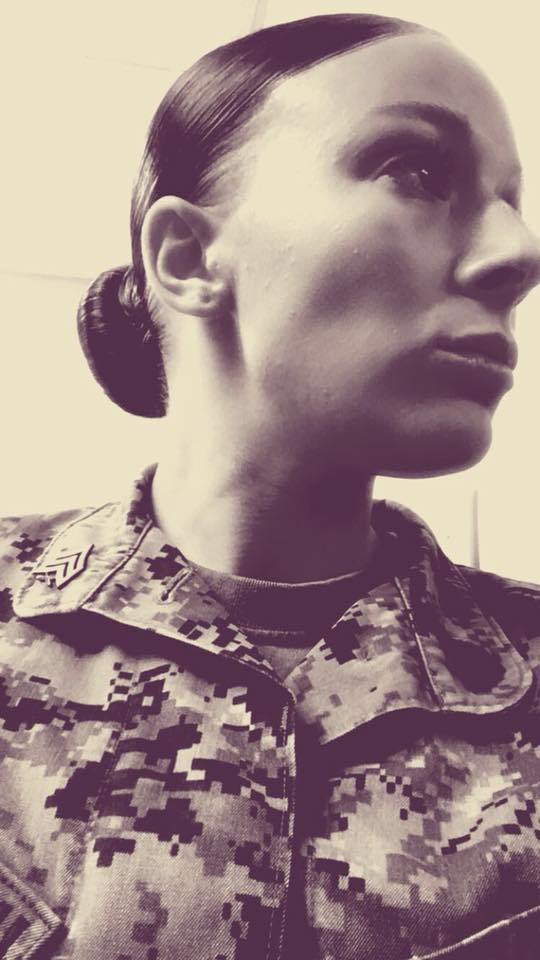
However, during my time as a dancer I met one of my very best friends, Ali O. Ali did not, and still does not, fit the ballerina stereotype. She is hardworking, adventurous, outdoorsy and strong. She is a Marine.

Ali danced for 16 years, just like I did. When we graduated high school, Ali said to me, “Could you see this graceful ballerina being a Marine?”

Although I was shocked, I knew that Ali had much more grit than I. She’s a farmer’s daughter, and worked in her dad’s watermelon fields practically from the time she could walk.(Side bar: She asked me to work with her when I was in middle school and I barely made it 4 hours out there. She still makes fun of me for how much I whined, but it is NOT an easy job!!)

Being a female Marine is not the only badass thing about her. When Ali was active in the Marine Corps, she also became a single mother.

Ali was stationed in Japan, California and Virginia. After serving 7 and a half years in active duty, she is now back in Indiana with her 5-year-old son.

This summer, I got to catch up with Ali and ask her questions about her experience as a Marine and as a single mom.

___________________________________________________________________

Why did you decide to join the Marine Corps in the first place?

I kind of had mixed emotions about going to college. I saw my friends going places for school and I didn’t really know what I wanted to study, so, why pay for the degree? School’s not my thing. I wanted to do something different for myself.

What was the most difficult part of being a Marine for you?

I would say just overcoming the trials you face as a female Marine. There are a lot of standards that are supposed to be held equally, but they’re not. They never are.

Let’s dig deeper into that. Women are constantly portrayed as “weak” or “too emotional” in today’s society. Did you ever have an encounter where someone in the Marines made you feel “weak” for being a woman?

Oh yea. One example where you’re looked at as weak is that typically women don’t run as fast as men. Look at how the physical exams are scored: a female would have to run 3 miles in 20 minutes for a “perfect score,” where a man’s “perfect score” would require him running the same distance in 17 minutes. Even if a woman got a “perfect score” of 20 minutes, the men still saw her as “less-than” because it’s not as fast as them.

What other things happened to you as a Marine that made you feel “less-than” or that lead your male counterparts to wrongfully judge you?

I had a boss once that would make me come into his office to write on his whiteboard. He told me he thought my handwriting was better than others’, but really, he was looking at my butt as I wrote. He made me do all kinds of other tasks for him too. If I refused to work for him, he’d send me out to the field. If I went to the field, I had to leave my kid behind for months on end, so I had no choice. When I did this work for him though, the other male Marines would think I was getting some sort of special treatment for being a woman. In actuality, I was being used and not treated well at all!

(I didn’t know what “the field” meant, so I asked her to explain it. Going to the field means going out in the middle of nowhere, usually in a desert area. Out there you do a lot of driving and logistics. Still confused?? Me too.)

Now let’s talk about the stereotype of women being “too emotional.” What did you encounter in your time as a Marine that was caused by this stereotype?

I was a Marine Sergeant, and a female at that. Since I was the boss to so many men, I had to control my emotions in order to get their respect. For example, if I didn’t yell at them all the time, they wouldn’t take me seriously and try to walk all over me. On the other hand, if I did yell at them, they’d call me a crazy bitch!

What about other female Marines that you worked with? Were they treated differently because they were women?

Yes. No matter a woman’s rank, she was treated differently. If a woman was treated well, other men would say she was getting “special treatment” and didn’t deserve it. If a woman was screamed at by her higher-up, the men would say something like, “that was nothing compared to the way he screamed at me earlier!” It was like nothing we ever got was merited or just, good or bad.

What do you think about the stereotypes of women being “weak” or “ruled by emotion”?

I don’t think I’m weak or too emotional. I understand why the stereotypes exist though. Yes, women typically express emotion more than men do. Yes, I can’t run as fast as a man…Whoop-dee-doo! However, I rose in the ranks for a reason, and there are other “manly” things I can do 10 times better than my male counterparts. I think the issue is that women can usually understand both sides, but men typically don’t see from a woman’s point of view.

Let’s switch gears now. I know that you had your son while on active duty. Tell me about this! Did you feel judged? Did you feel supported?

It’s a crazy story. Well, my son happened when my mom and sister came to Japan (where I was stationed) for vacation. When they came, my son’s dad and I had to ask for leave to go on vacation too.

His dad was a corporal at the time and I was a lance corporal then. It already looked bad that two higher-ups in the Marines were dating. Well, when we asked for the time off, my commanding officer said to me, “I’ll let you two go together out of the kindness of my heart, but don’t let anything happen.” This was him telling me not to get pregnant. So, when I came back pregnant it was a huge ordeal. (Side bar: I personally think it’s hilarious that she DID get pregnant on the trip after her commanding officer told her she couldn’t. Maybe I just revel in chaos and rebellion, but it’s a great way to stick it to the man, I think!)

The Marines only see you as a number, as an asset to the Corps. They don’t even pretend to care about your mental health, your family life…nothing.

Tell me more about being treated as a number. How did this affect you where pregnant?

Well, one example is when I worked as a dispatcher. Basically, I had to stay in the shop from the time a truck left until the truck came back. One time they had me stay in the shop for weeks on end, pregnant, only eating tuna and crackers. They didn’t take my pregnancy or my baby’s health into consideration when they sent me out there.

Another example of this lack of concern for my baby’s well-being was when they had me come support securing trucks before a typhoon. Before a big storm like that, they make you come immediately, as you are, to clear out weapons and things from trucks. I came as I was, in flip-flops and shorts, to work in the pouring rain when I was pregnant. I stepped into a wet truck, slipped, and fell flat on my face. I was pregnant! That was when I started to think, “f*** all of this!”

There are other things like that I could tell you about, but being pregnant in the Marines was challenging in every aspect. You’re looked down upon for even going to a doctor’s appointment. They have me for life and I could barely take an hour to get an ultrasound!

I know that you and your son’s father did not stay together after your son was born, but we won’t go into details of that. What was it like to be a single mom while you were on active duty?

It’s difficult to have a family and be in the Marine Corps. Male bosses just don’t seem to care that you have a child to take care of. Say that they’re looking for someone to do a task…they don’t take you having a child into consideration when they choose someone for it.

A more specific example is when they sent me to the field for months. I couldn’t take my son with me, so I had to fly with him to Indiana to stay at my parents’ house. Then I’d have to fly back to where I was stationed. The money I had to spend on airline tickets was astronomical!

I also would be looked down upon if I didn’t go work out with the marines at 5:30 AM, so I’d have to get him up at 4:30 to bring him to a sitter…just to work out!

In general, it was very overwhelming to balance my duties as a mom and a Marine. Since we had to move around a lot, my son’s behavior was changed a lot and it was a lot to handle. I’d have breakdowns from the stress!

What do you do now that you’re no longer in active duty? How do you balance that with your duties of being a mother?

I’m in school now and we’re living at my parents’ house. I was working working part time, too, but I wasn’t making enough money. I decided it was better to just be a full time student. It’s god awful living with my parents again, but it’s what I need right now.

You would think that I’d feel better at balancing duties, but because of COVID-19, my son is home all the time and asking me to play when I’m trying to do school work. It’s really hard to be the mom that gets to play with her kid AND be the student that gets A’s.

What are some of the positives of being a single mother to your son?

My son and I are pretty much best buds and I know that he thinks the world of me. Even though it would be nice to have some help and someone to lean on, you also don’t have someone telling you exactly how to raise your child. It’s all up to you!

What advice or words of inspiration do you have for current or future single mamas?

Don’t stress out about the little things!

Don’t let someone tell you how to parent; you know what’s best for your child.

Most importantly, if a family member does not want to be in your child’s life, do not try to force it. If someone wants to know and love your kid, they will make an effort.

What advice do you have for women that are thinking of joining the Marine Corps?

Make sure that you are physically and emotionally in the right space. Weigh the options and decide if it’s what is best for you now. Do you want to start a family soon? Think it over before you decide to join.

________________________________________________________________________

Ali O. is and always has been one of the strongest people I know. Her son has been through a lot of changes in his 5 years of life, but he is kind, smart, funny and well-rounded, all thanks to his devoted mother. She is constantly breaking stereotypes and, I believe, is an inspiration for all women out there.

Climate Change: Tipping the Scale

In 2017, I had the opportunity to work as a writer for a United Nations movement, Every Woman Every Child. This groundbreaking group of 8 or so people working in the basement of the UN building are fighting for advocacy and mobilization of government efforts to support women and children around the world. During my time there, I focused on writing articles that affect the entire world population, which in turn, affect the health and safety of women and children everywhere.

In November of 2017, I was given the assignment to write an article over climate change. I immediately thought back to growing up in small-town Indiana, where many people either believed that climate change was a hoax, or that it probably existed, but it was not a personal problem, and therefore, should just be ignored.

Climate change is still a very real threat to our planet, so I updated my article a bit and posted it below.

___________________________________________________________________

“I don’t care about climate change.  It doesn’t affect me.”

The glaciers are melting. For example, the glaciers in the Rwenzori Mountains in Africa used to close off surrounding regions with freezing “microclimates.” These freezing temperatures would not allow malaria-carrying mosquitoes to live, which protected the people from this deadly disease. Now that the ice is melting, the area is being plagued by malaria.

“But, I don’t care about climate change. It doesn’t affect me.”

Due to rising temperatures and drought, Australia has been hit by devastating bushfire. The air is toxic, many homes have been destroyed and lives have been lost.

“But, I don’t care about climate change. It doesn’t affect me.”

Our coastlines are shrinking. As aforementioned, the glaciers are melting, causing the sea level to rise. In warmer areas, greenhouse gases are heating up the ocean which also causes the water to expand. The rise in sea level is already revealing permanent damage. For example, flooding in Georgia from hurricane Irma destroyed massive amounts of property. According to Wabe.org, Georgia property value has even dropped by $15 million due to flooding risks.

“But, I don’t care about climate change. It doesn’t affect me.”

The gasoline in your car, the hairspray keeping your curls together, the cold air blowing from your bedroom window unit: These are nothing but a simple part of your everyday routine. These parts of our lives are etched, engrained into our psyche. We do them without thought. It’s like when you drive home from work on autopilot every night– you no longer think about the fact that are you are driving a 2-ton vehicle at 60 MPH and the danger you might encounter. These seemingly harmless routines not only affect our planet, but they CAN and WILL affect YOU.

Pollution 

Pollution is the largest environmental cause of disease and death in the world today and no country is unaffected by it. It is human activities including industrialization, urbanization and globalization that drive pollution.

STATS:

  • Nearly 90% of the population living in cities worldwide is breathing air that fails to meet WHO air quality guideline limits.
  • At least 12.6 million people die each year because of preventable environmental causes, like pneumonia, diarrhea and cholera.
  • Even in your own homes, air pollution is a threat to your health. WHO estimates that 3.8 million people die every year from household air pollution and 50% of all pneumonia deaths in children under 5 are caused by household air pollution.

Pollution is a symptom and unintended consequence of unhealthy and unsustainable development. If we want to reduce the environmental burden of disease globally, we must address the sources of pollution to cultivate a healthier and safer environment.

Thankfully, according to World Wild Life, about 6 in 10 Americans today find climate change alarming– this number has nearly doubled in the past 5 years. Unfortunately, this is not enough to start making real changes to the harm we’ve already made.

We need to care about climate change and pollution. It’s up to us to tip the scale.

Sources:

worldwildlife.org

climatecouncil.org

wabe.org

who.int