Somewhere in Rainbows

My parents met in Bowling Green at Western Kentucky University in the mid 90’s. My mom was in a sorority, my dad a fraternity and they hit it off at a Greek mixer. I came into existence in 1995, they subsequently dropped out of university and moved to Louisville to raise little ol’ me. Two and a half years after I was born, my sister came into the picture, and a year or so after that my parents got divorced. My dad stayed in Kentucky, but my mom needed to move to Indiana to be closer to my aunt and nana.

Every other weekend, every summer, and alternating holidays would be spent at my dad’s in Kentucky (this schedule not strictly followed as I got older) and all schooling would take place in Indiana. The driving distance between my parents was a lengthy three hours; which is short enough to be doable, but long enough to be slightly painful. The divorce wasn’t easy on anyone. It was never a smooth, simple thing. It was uncomfortable and it always felt like someone was deeply hurting more than the other, no one ever on the same wavelengths, and everyone seemingly took turns over-vocalizing the pain in what was usually not the most constructive way. Essentially, none of us made it through unscathed.

When it was time for me to start kindergarten, my mom soon found the Catholic elementary school, St. Ambrose, in Anderson, that seemed like the best fit. Quickly upon starting school, I was also signed up for this afterschool program called Rainbows which took place every Tuesday. A few other kids and myself would all get a ride over to the slightly larger Catholic school in town, we’d dash out of the car for bomb milk and cookies, then talk about our feelings for an hour or so in small groups.

Pretty quickly, all of us kids realized the common denominator between us was that we all lacked a nuclear household.

Rainbows created this community of kids and a safe space that essentially validated our feelings. All of them, every single emotion we felt… we were told it was normal.

If I’m being honest, I don’t remember nearly any of the particulars in those little lessons we had within the small group talks. I was in Rainbows for years, yet I genuinely don’t remember what we talked about each week. I just vaguely remember the constant undertone of reassurance that nothing was our fault, which I understand is a common thing for kids with divorced parents to feel. Though I did (and do) feel responsible for my parents marriage, never in my life have I ever felt to blame for my parents divorce.

The primary memories that stick out from Rainbows are the relationships that it created. There were so many adults that felt (and still feel) like an extension of family, and the best friends I had in that lifetime have transcended into adulthood. All of the friendships, even the ones that didn’t quite withstand the test of time, were/are priceless and heavily impacted my life. They’re the people who just got it. It’s always felt like yes, we’re all in our own boats, but we’re still in the same ocean weathering similar storms.

Rainbows encouraged a deep level of empathy.

We were this group of mismatched kids, varying in age, personality types, and all with different stories: some kids lost a parent, some lived with grandparents, some parents were divorced but still lived close to each other (these were the ones I was most jealous of), some kids didn’t know one of their parents at all – the list goes on. Yet throughout the lessons, we were made to feel that yes, our situation sucks and our story may seem harder than the person’s next to us, but that doesn’t invalidate that person’s pain.

All pain is valid, we are not here on this Earth to decide who gets to feel and what it is they feel.

. . .

In deciding to write this article, I googled Rainbows for the first time ever. Finding out that Rainbows was founded by a woman was not surprising, but it did bring a smile to my face (#girlpower). Rainbows, actually fully named Rainbows for All Children, was founded in the mid 70’s by Suzy Yehl Marta, a divorced mother of three boys. She was devastated when her marriage ended and found solace in a support group. It didn’t take long for her to realize that her sons could also greatly benefit from such a group, but her search for this came up empty. Thus, Rainbows for All Children was born.

“Working with other concerned parents, Suzy began organizing weekend retreats for the children in single parent homes. In three years, more than 800 youth benefited from the retreats. Suzy knew more needed to be done. She started working on a curriculum, the foundation of Rainbows for All Children, for children who experienced loss. The curriculum was designed to provide grieving elementary school children with an understanding of their new family unit, to help build a sense of self-esteem and to give them the tools to properly cope with their loss.”

Rainbows for All Children

. . .

Ultimately, it seems Suzy understood that relying on a child’s resiliency isn’t always the best or only answer. Just because kids have the ability to quickly bounce back on their own, doesn’t mean they should be left to their own devices to do so. I mean, think about it: why do adults go to therapy? Typically to finally unpack all of that compartmentalized childhood trauma. So when you think your kid is “getting over it” and “bouncing back” – it’s possible that they’re really just saving that pain for later.

Rainbows is very much still operating today – head to their website to learn more!
Workplace Abuse: Calling Out My First Boss

I’ve always been a hardworking individual. Most of my self-esteem comes from knowing that I’ve done a “good job” at work, or that I’ve somehow helped to make someone else’s life easier by going above and beyond with my workplace duties. Unfortunately, my self-esteem is also adversely affected by things I do at work.

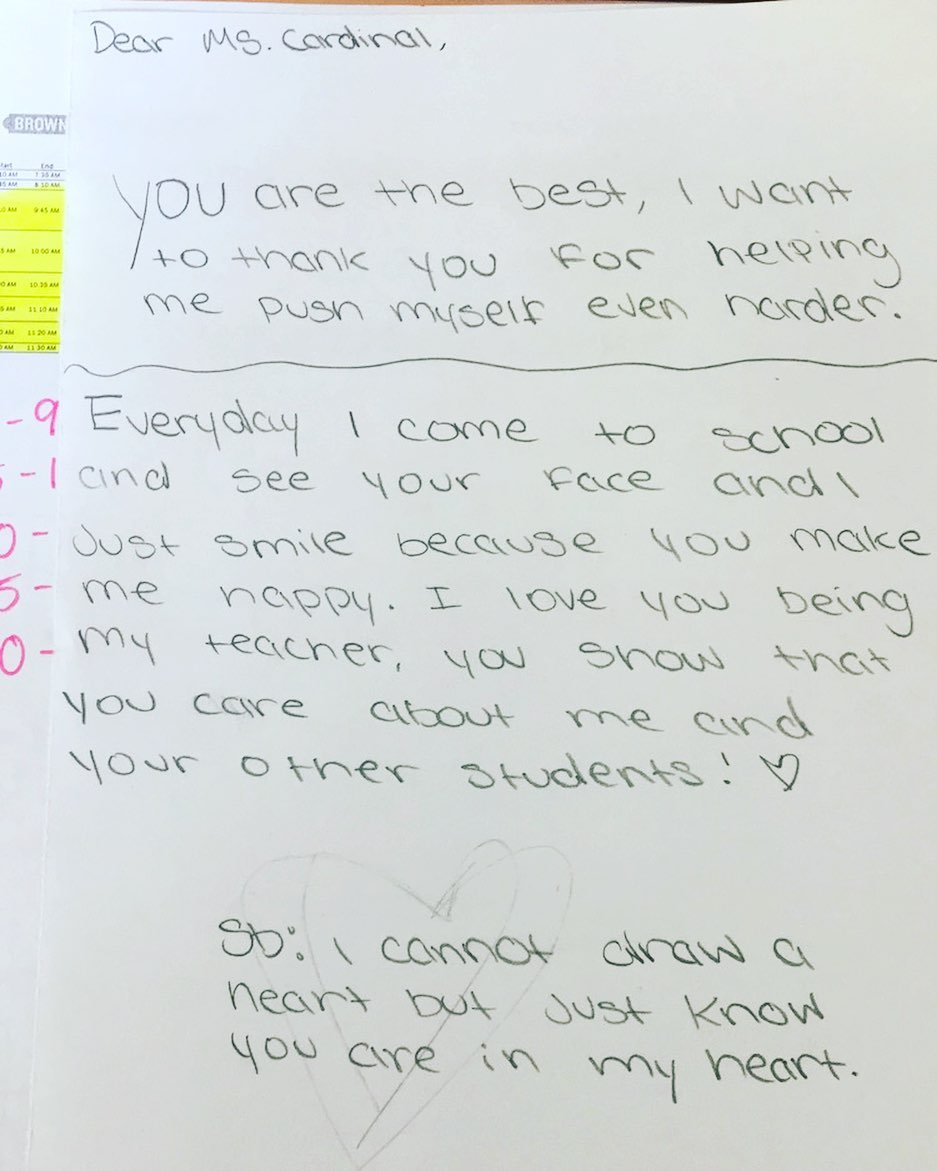
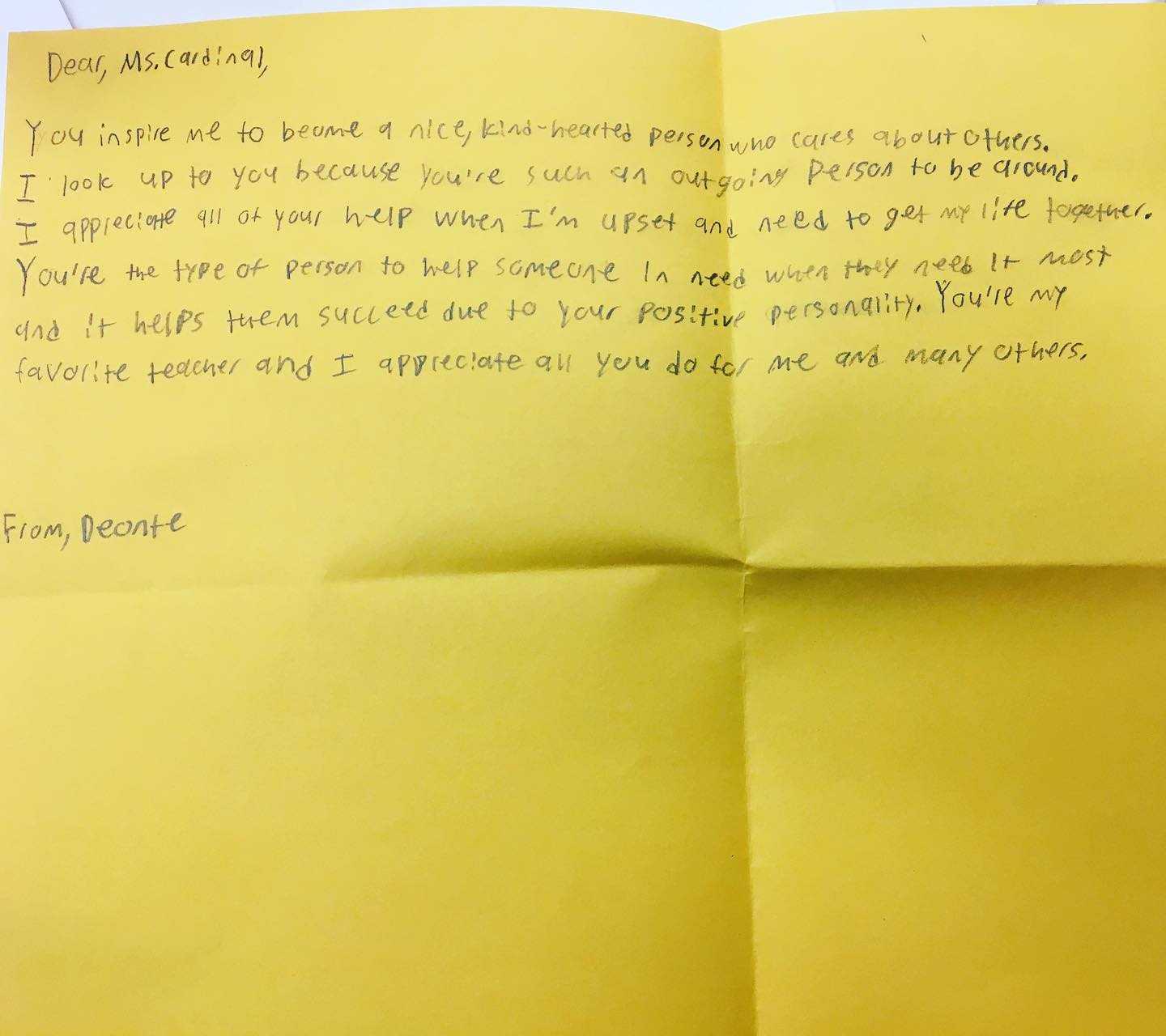
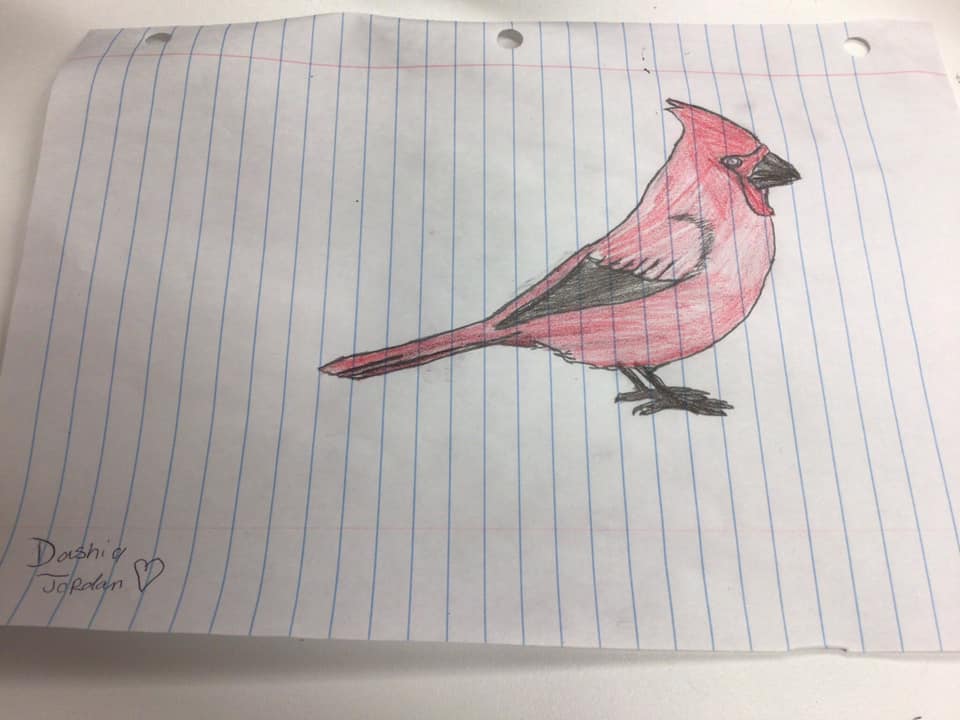
I’ve noticed a pattern in my own thinking while searching for ways to improve my self-esteem. When I find myself spiraling into negative self-talk, it’s almost ALWAYS set off by not feeling good enough at my job. I have numerous pieces of evidence to prove that I’m a great teacher: thank you notes and drawings from students, noticeable academic growth in my classes, obvious feelings of mutual trust and love between myself and the kids I teach. However, I’m never able to see those beautiful and positive things as they are. Instead, I find dozens of reasons every week why I think I’m doing terribly and will most definitely be fired.

Why do I think this way? I’ve found a connection from my past that seems to explain it: My first boss ever was incredibly abusive.

*–*–*–*–*–*

I’m from a small town in southern Indiana, of around 17,000 people. That seems like a large number, but in reality, everyone knows everyone. In middle school, I went to the very small Catholic school in town, Rivet. This school was so small, that they allowed off-campus lunch for kids who were legally able to drive. Most kids, though, chose to walk to some of the cafes on Main Street for lunch. One of those nearby lunch-spots was a little cafe and caterer, owned by one of the Rivet families.

When I was fourteen, one morning at Rivet I heard an announcement over the loudspeaker saying that this cafe was looking to hire a dishwasher. Being the hard-worker that I am, I was incredibly excited by this opportunity. I’m not even 16 yet and I can get a job! I was ready to pounce. However, also being the socially anxious human that I am, I was too scared to go out for the job on my own. I asked my best friend at the time to apply for it with me, and she did. Luckily, my friend’s brother’s girlfriend was a waitress there at the time, so we got the job. I was SO excited to start. A couple of weeks later, on a Saturday at 10:30AM, my heart pounded out of my chest as I walked into the cafe with my friend in our green polos. My new boss, my first boss ever (who I’ll call “Patty”), introduced herself with a clearly fake smile and overly-chipper demeanor. I didn’t realize what I’d gotten myself into.

What it Was Like

My first day on the job was spent washing dishes from 10:30 to 4:00, being scolded for spraying the dishes with too much water or asking too many times for help putting away dishes that were stored in high places. My friend got to be trained that day as “waitress helper.” I eventually got to be trained as “waitress helper” too, but I didn’t get to work as one very much until my friend eventually quit. I knew I was hired on as a dishwasher, so I had no issue washing dishes…but my friend was hired for the same position as me and didn’t have to! Luckily, it didn’t take my friend very long to quit, so I was out of the kitchen and into the front of house. Everything seemed to be looking up, but unfortunately, it all went downhill from there.

#1: I was never appreciated.

The title of “waitress helper” was the name my boss came up with, because the role was honestly so many jobs in one that nothing else fit. After a few years of being a “waitress helper,” I came up with my own job title: “Patty’s bitch.” The waitress helpers were hosts, greeters, food-runners, baristas, decorators, table-bussers, phone-answerers, delivery drivers, organizers, errand-runners and anything else that Patty may have needed us to do. I legitimately picked up and dropped off her kids somewhere once and even wrapped her Christmas presents a few times.

I like to be busy, so having a million things on my plate actually keeps me motivated to work. What I don’t like so much is doing a million things for someone and getting zero appreciation for it. Here’s one small example: As a waitress helper, as soon as you can drive and get your own car, you are made the delivery driver. The cafe delivered lunch to hospitals and doctors’ offices as well as to some apartments. However, deliveries were always HUGE. A typical delivery to the hospital would be at least one large box full of meals in paper bags, sometimes a couple plastic quart containers of soup, and a few full drink carriers in another box. My petite self would have to carry these giant boxes through the hospital (with literally no one offering to help me, by the way) and set up all the food in a lounge. Then I’d rush back to the restaurant to grab another delivery, and the cycle would continue. Another messed up part about deliveries, was that I often had to deliver to old men in this gross apartment complex. These apartments smelled like cat pee and stale cigarettes and all of the lighting was similar to that of a horror film. I’d grab my giant box of soup and sandwiches, then I’d have to walk directly into a man’s apartment, find his kitchen table, place all the food there (with the old man watching me from his recliner) and leave. After a full day of deliveries, which I was not allowed to take tips for, I got my “delivery payment” of a whopping $5. They gave me five dollars for gas compensation. Doing deliveries made me feel SO unappreciated, uncomfortable and frankly, unsafe. I had no choice but to do it, though. If I didn’t ask “how high” every time Patty told me to jump, she’d make it very clear to me that I was replaceable, which leads me to my next point.

#2: I was constantly reminded that I was insignificant.

This was a part-time job at a local cafe. It was also my first job. I had zero expectations and nothing to compare my treatment to. I didn’t realize that I was facing daily abuse from my boss until I went to college and picked up a waitressing gig at Applebee’s. On my first week of waiting tables at Applebee’s, I made a mistake when I input someone’s order and forgot to mark that a man wanted his salad to come out before his meal. When I brought out his steak and salad at the same time, the man threw the salad across the table, and with lettuce and Ranch dressing flying everywhere, he shouted “F*** YOU! I don’t want this f***ing salad anymore! It’s too late!” I picked everything up and ran to my manager crying, apologizing profusely for messing up and assuming I’d be fired on the spot. To my surprise, my boss went over to the table with a to-go box and told the man to get out and not come back. She said his meal today was free, but she would not tolerate his treatment toward one of her waitresses. I’m still blown away by the fact that my boss stood up for me. She trusted me and cared about me, and I’d only been working for her for a little over a week! This experience opened my eyes to how unacceptable my treatment was by Patty at the local cafe in my hometown.

The reason I started this section with an anecdote from my time working at Applebee’s was so I could really juxtapose the way those 2 bosses treated me. Keep that Applebee’s story in mind as you read the following very true stories of what I endured with Patty as my boss.

Exhibit A) Remember, I started working for Patty at age 14. One summer when I was 16, she told me I needed to clean and re-organize all of the catering stuff they had stored on shelves in the basement. I was actually PUMPED for this task, because I love to re-organize and de-clutter spaces. It also meant I could hide away in the basement with my headphones in everyday for a week and I didn’t have to listen to anyone telling me what to do all day. When that week was over, I felt rejuvenated! The basement looked incredible; Patty even said so herself!

The next week, Patty hired on a new waitress helper and even hinted that I might get to be a waitress soon (which absolutely did not happen, but I think she purposely gave me that hope every once in awhile just so I’d work even harder). Since I’d been a waitress helper there longer than anyone else, Patty wanted me to train the newbie. She welcomed the new girl with that same artificially bubbly smile and had me walk around the restaurant with them to show her where everything was. We brought the new-hire to the basement to show her the freezer, laundry and catering supplies and Patty gave a fake smile and said, “Zoë just re-organized this basement! Doesn’t it look great? Zoë is our superstar, she’s been here awhile and knows how to do it all!” Her praise made me feel so special and loved, but only for a short moment. Before I could even thank her for the kind words, she turned to me inquisitively, with her fake smile starting to fade and said, “tell me, superstar, what are the soups of the day?” My stomach dropped into my shoes. I was whisked away with Patty and the new hire as soon as I got into the building. I didn’t have time to even look at the soups yet. Luckily the first three were always the same. I replied, “Um…cheese broccoli, tomato basil, potato…I’m not sure about the others. I haven’t gotten to look yet.” Patty turned her head to the new hire with a fresh fake smile and said, “Forget everything good I said about Zoë.” Then, while still facing the new hire, she said to me, “Get upstairs and learn the soups, Zoë.”

These are the exact words she used. The experience is so etched into my memory, because I was terrified of losing my job and I had never felt so small. I’m sure that Patty has no memory of this conversation. The immediate flip from telling me that I’m amazing to saying there’s nothing good about me was consistent throughout my time at this cafe; that story is just one example of it happening at a moment’s notice. Usually it would be more like one or two days of praise followed by several days of making me question why she hadn’t fired me yet. What’s messed up is that eventually, I truly believed that I deserved to be fired. Those were Patty’s mind games.

Exhibit B) After that moment in the basement, I recognized more and more that Patty was a cruel person to work for. However, I was still afraid of losing that job. Mama didn’t raise no quitter, but mama didn’t say I had to love every minute of everything I start. So later that same summer, I was at my best friend’s house for a sleepover on a Friday night. I always had to work on Saturdays from 11-4. My friend’s big sister brought up the idea of going to Patoka Lake on Saturday. All of my friends could go except for me. I wanted to go so badly. I didn’t want to miss out on lake adventures for 5 hours of torture that would leave me with only 33 more dollars on my paycheck. I was 16. I deserved to be 16 for one Saturday, so at 10:00AM I called in sick. I spoke to the front manager and all seemed to be okay. I was good to go to Patoka Lake! Then about 15 minutes later, I got a call from Patty.

Patty verbally attacked me for calling in sick. She said I probably felt well enough to work. I told her I didn’t and even added in that I had a doctor’s appointment scheduled. She retorted “Which doctor? Because most doctors’ offices aren’t open on Saturdays.” I stuttered around but stuck to my lie. She called me a liar and said if I ever called in sick again that I’d be fired. So I never called in sick again, and I worked there for 4 and a half more years.

I was lying…but honestly, who cares? Looking back on this moment as an adult, I realize that she had no right to accuse me of lying in the first place. She had no right to even ask questions. If I say that I’m too sick to come to work, ONE TIME in 2 years of waiting on you hand and foot, you should just say, “We really need you, but I understand and I hope you feel better.” But then again, Patty would never tell an employee that she needs them. She likes to bully her employees so think they’re worthless so they try harder to impress her.

I have countless other examples of mistreatment, but in order to stop this article from becoming a novel, I won’t list more. I think that a clear picture of “Patty” has been painted.

*–*–*–*–*–*

How this Abuse Affected Me

I consider Patty to have been my abuser. I trusted this adult, as a 14-year-old child, to respect me, care about me and help me grow. Instead, she used my desire to please others and manipulated my already low self-esteem to make me think she was doing me a favor by giving me the job. She constantly built me up just to quickly break me down until I no longer felt worthy to be an employee. Her abuse affected me in more ways than one.

#1: Physical Effects

In high school, one of my best friends needed a job, so I put in a good word and Patty hired her on as a waitress helper. My friend, being older than I was when she was hired, saw through Patty’s fake-nice façade almost immediately. On one of her first days of work, Patty sat down for a “free” lunch with us at the cafe. The whole time we ate, our boss spoke almost explicitly about herself. She’d say, “My life is hard, ladies, because no matter how busy I am, EVERYONE wants to talk to Patty.” She then somehow got on a tangent about how if we ever were caught smoking pot that we’d be fired and that she believed that smoking pot one time would give your future children birth defects. I was used to hearing her nonsense, but I could feel my friend’s eyes rolling into the back of her head.

My friend worked there for about a year. Before she quit she told me that every morning before work, she got a horrible stomach ache from anxiety. I never thought about it that way, but I had a stomach ache every morning that I had to work too. It was like clockwork. I didn’t think about it until my friend told me about that, but this job I had was causing me so much anxiety that it started to show up as physical symptoms. To further validate this, after I quit working for Patty, I never had another pre-work stomach ache until I worked at a terrible elementary school. By then, I knew my body was telling me to quit working there, so I got out. That’s why I teach middle school now.

#2: Subconscious Effects

I worked at Patty’s family cafe for a total of 6 years. It’s now been 7 years since I’ve worn that green polo and I’m completely serious when I say that I still have regular nightmares about working there. They usually have to do with me being scheduled to work and not knowing about it and them threatening to fire me if I don’t get to the restaurant NOW. Most of these dreams take place in present-day, by the way. They tell me I’ll be fired if I don’t get to work even though I live in NYC, and dream me is still in panic mode, racing back to my hometown and trying to find my polo so I won’t get fired (even though I have a whole career in NYC that is undoubtedly more important). How can Patty still be torturing me in my subconscious today?

#3: Effects on my Self-Esteem

As aforementioned in the introduction of this article, the 6-year cycle of workplace abuse I endured has made a real impact on my psyche. After walking on eggshells from age 14 to 20, I’ve internalized the idea that I’m insignificant at work, that I’m 100% replaceable and that for each of my accomplishments, there are 5 more mistakes I’m doomed to make.

*–*–*–*–*–*

Today, I have a career that I can be proud of. I’m able to see my accomplishments, but I’m still struggling to not let my “failures” overshadow them. I’ve even explained the issues I have with workplace confidence to the principal at the middle school I teach for, and fortunately she is the most caring and understanding leader that I’ve ever followed who hears me, sees me and wants to help me grow.

It’s through remembering my positive experiences of other places I’ve worked that I can realize my worth. My current principal believes in me. My boss at CAMPUS English Language School supported me. My boss at Infinity English College trusted me. My bosses at the other part-time waitressing jobs (Applebee’s and Red Lobster) cared about me as a person.

Last summer, I went to lunch at that cafe. Patty saw me, but pretended she didn’t. I decided to stop her to say hello and she acted like she didn’t know who I was. Patty always loved to make me feel insignificant.

In reality, Patty is insignificant in my life. I only hope that something changes at that restaurant, if it hasn’t already. She will probably never change though. At least I know that I’m growing and changing everyday, and I will no longer let my first boss have power over me.

Finding My Green Thumb

I come from a family of green thumbs. My nana’s house has always felt just a few steps away from becoming a greenhouse with wispy vines flowing down shelves, succulents covering the window sill, and stalks of bamboo or money trees as table centerpieces. My mom has a love of botany and we frequently planted quite successful gardens with her growing up; gardens of pumpkins, tomatoes, sunflowers, and more. Then even my dad’s side, my papaw always had an ever flowing garden of vegetables, typically gathered by my mamaw, my cousins and myself, following which we’d all snap the green beans together.

My papaw also took special care in the front yard landscaping, artfully planting specific flowers in very specific spots. Truth be told, I only assume his landscaping was this meticulous perhaps it wasn’t and he really just planted whatever wherever – but reflecting on a story no one can seem to forget, yet I don’t have the capacity to remember, his planting all had to have been pretty methodical: evidently when I pulled a tulip out of the ground, Easter of 1998, I practically detonated a bomb in the Smith household.

So not only here is evidence of the purple tulip that nearly ruined Easter and ‘destroyed’ my papaw’s meticulously landscaped yard, but here is evidence of me killing my first (and certainly not last) plant.

I didn’t automatically inherit my family’s green thumb. And truth be told, while this has whole “green thumb” thing has always been talked about like it’s either something you have or you don’t, my adult life has taught me that isn’t really the case. Having a green thumb stems from understanding, receptiveness, and a will to learn. If you have those three traits and simultaneously have a desire for some greenery to take root in your space (pun intended) then you can certainly become equipped with a green thumb.

It’s only been since moving to NY in 2017 when I’ve felt this incessant need to bring an abundance of plants into my home. I also was given the responsibility of “mothering” the plants in our office, which I excitedly took it on. I quickly began boasting that I come from a family of green thumbs, telling people to watch these babies thrive – when suddenly, they all started to die. Everywhere, in rapid succession. In the office I was killing an orchid a month or so on average, succulents were drying up or even getting floppy and it was all just a disaster to be honest. It took one of my colleagues with an exceptional green thumb of giving me some succulent pointers like, “Water only when the soil is completely dry, and when these little leaves fall off stick them back in the soil – they’ll grow.” Then with the orchid, another colleague said to water them with ice cubes only.

These little tips and tricks were working, I was incredibly receptive not only to the advice, but I in turn began understanding those plants a bit more. It was great. But then I became ballsy and got involved with different plants that I would go on to kill (herbs, aloe, and air plants I’ve not synced the vibe with yet.)

But if you’re someone like me who so desperately wants to have green vibes in your space, but you haven’t quite solidified your green thumb enough to be confident in your plant choices… I got you. Below are some ways I’ve greened up my space while managing to minimize my casualties.

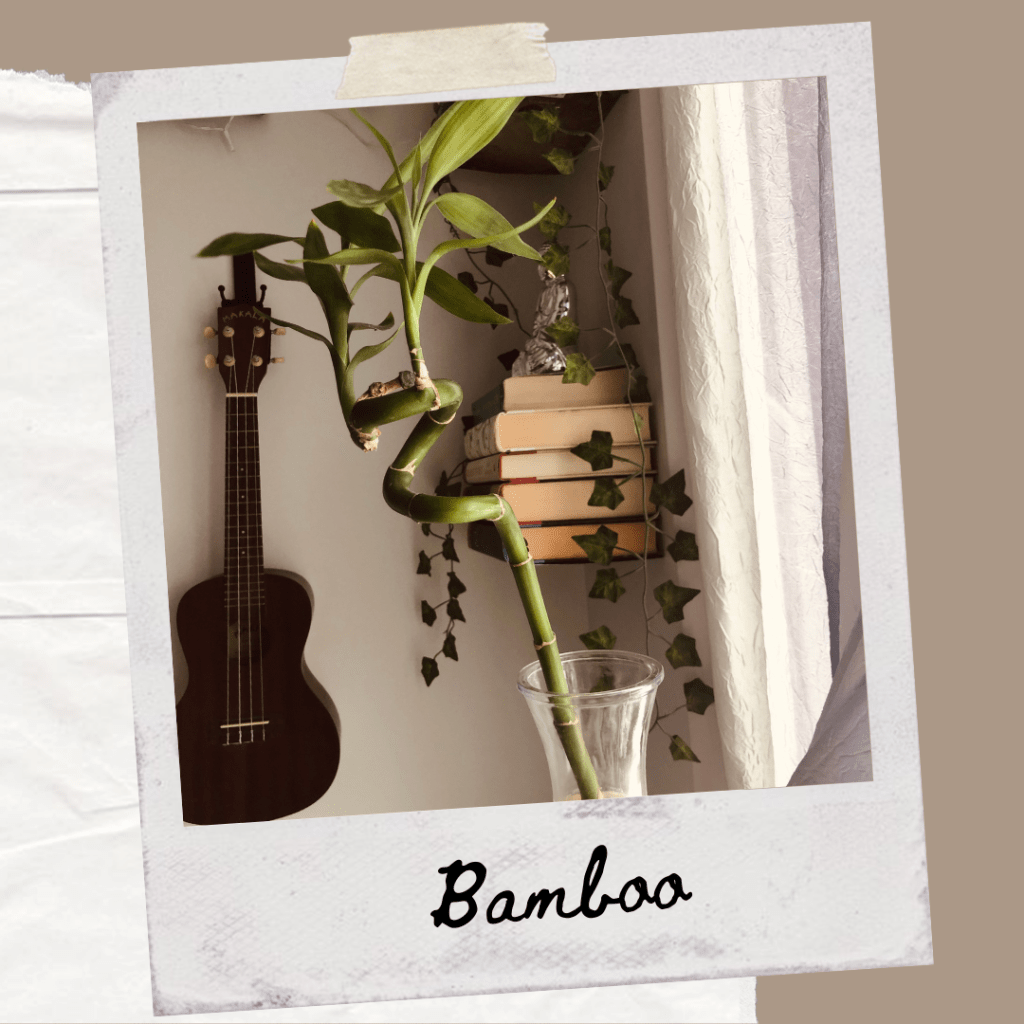
Bamboo

I invested in one stalk of bamboo as a trial run this summer. I was shopping with my mom at Home Depot, actually looking for some herbs that I could start growing but then would subsequently kill a month later, when I came across this guy and his brethren.

Why did I buy him?

On his little tag, there was a breakdown of the meaning behind the number of stalks you have and what they bring to your life. It only listed the meaning of up to two stalks: 1 Stalk = good fortune and 2 Stalks = love. But really the more you buy, the more meanings there are behind them, I later discovered.

Your girl just wants some good fortune, and not really in the mood to tempt fate with killing not one but potentially two stalks of bamboo.. so I went with just the one. And it’s been successful! He’s super low maintenance, I just keep him on my window sill, change his water and clean the vase every week or so and he’s golden. Golden, growing, and makes me think I could maybe handle taking care of a fish…

Succulents

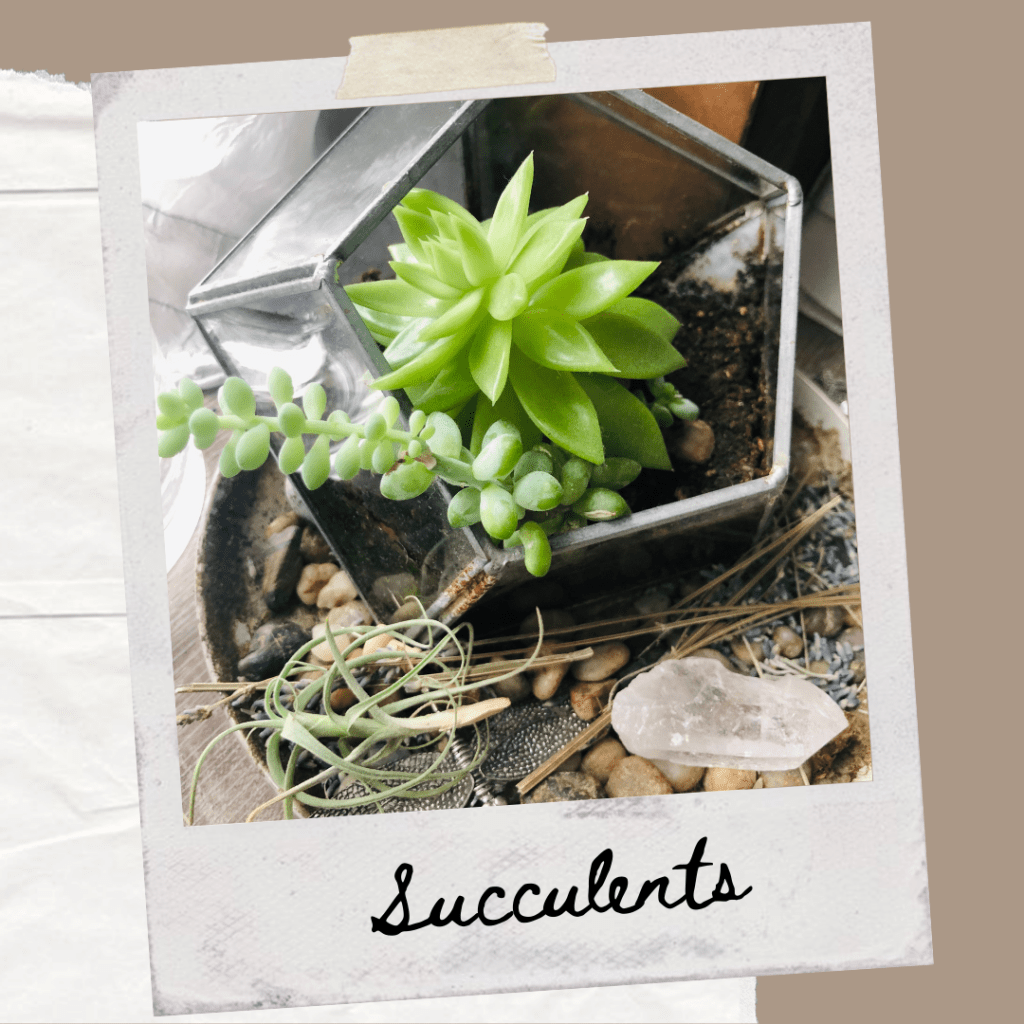
Alright, I am well well aware that there are different types of succulents that all thrive in different environments, yadda yadda – but these dudes, whatever they are, I’ve somehow managed to keep alive for like three years.

When I lived in Chinatown, around the period when I was killing plants about as fast as I’d buy more, I invested in this fun monthly box, Succulent Studios, and they would send me 2-3 succulents a month. Which was great, but I kept this subscription for quite a while… totaling in some 20 succulents or so.

And I killed all of them except these two. Honestly I think they’ve been near death a handful of times but I’ve somehow revived them.

The trick is to just simply not overwater, maybe decide on one day a week where it’s watering time and that’s the water they will thrive on, make sure they’re in a spot with decent sunlight too.

You’ll also notice there is an air plant lying on that same platter. I’m pretty sure he’s dead.

Dried & Fake

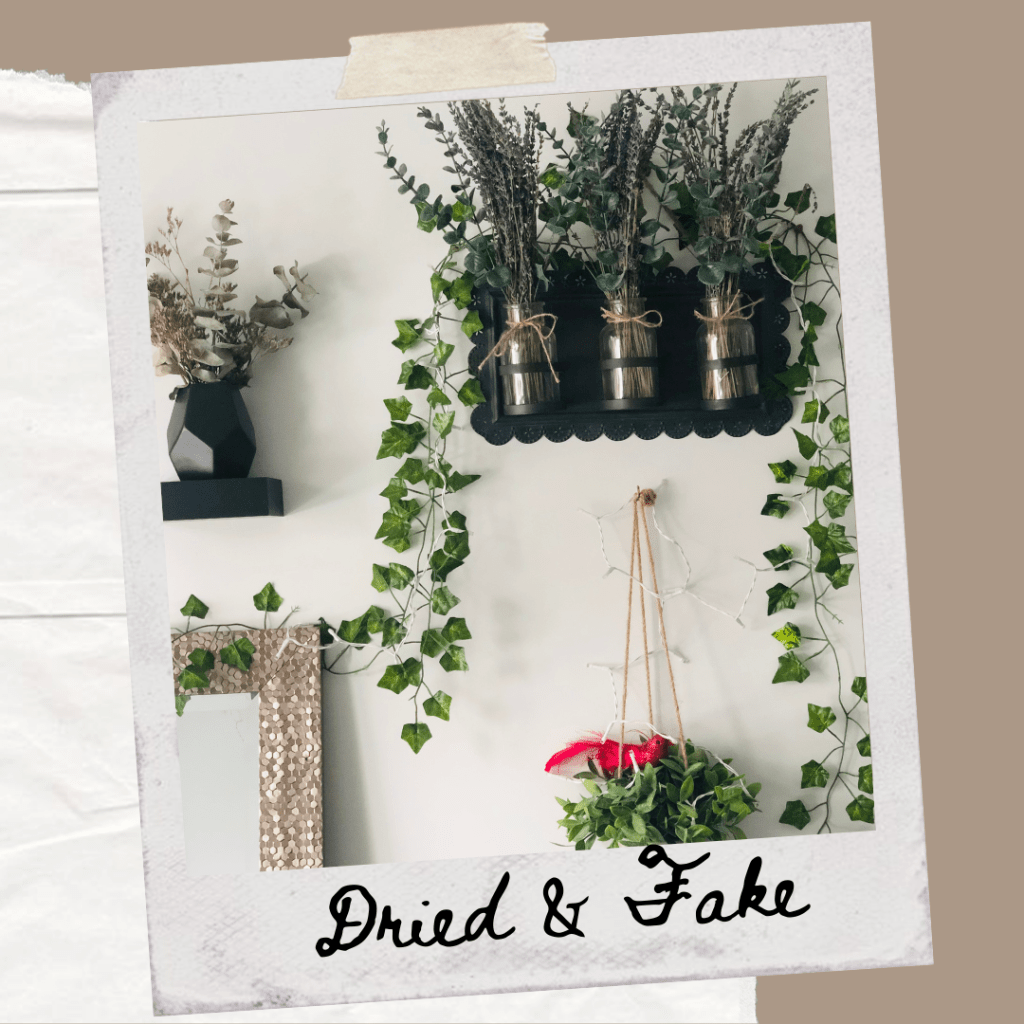
Whenever I feel the need to buy fresh flowers for myself, I always buy eucalyptus and baby’s-breath. Not only for their refreshing scents and subtle decor, but because they dry really well. If dried in a space with little sun, they’ll even maintain their color perfectly. I’d also like to note, I don’t do anything special for the drying, I keep them in the vase and boom, works great.

I also really love the smell of lavender and I found that you can buy dried lavender from Amazon and it’s awesome – there’s so much and it comes packaged in pretty paper, definitely a great, albeit messy, investment.

Amazon is also a great source for other fake greenery, it’s where I got that ivy you see hanging in the photos and also the eucalyptus mixed with the lavender in the three vases is fake as well (the eucalyptus in the lone black vase is real and dry.)

. . .

Ultimately the biggest piece of advice I can offer you is to understand and accept that every plant can die. While there are no magical plants that simply can’t be killed, there are plants that are just harder to kill. So if you want to dive into the plant world, the green life vibe, but everything you touch dies… take it one step at a time. Get one or two real plants to attempt to keep alive (team bamboo over here) and then buy some fake plants off amazon.

Basically, fake it till you make it.

. . .

Literary Wellness To Pass The Time

For those aspiring toward self-betterment, or those simply looking to cope with mental illness: keep reading. When I moved to the ‘big’ city, I left my therapist behind. After switching companies twice and health insurance three times, I never found a new one. Maybe it’s social anxiety, maybe it’s laziness. Who knows. Instead, during an especially desperate, depression-spiral induced shopping trip to Barnes & Noble two years ago, I started buying self-help books. These are the ones I’ve found and what I’ve learned from them.


First, We Make The Beast Beautiful: A New Journey Through Anxiety by Sarah Wilson

This was the first self-help book that I purchased in my shopping trip of desperation and it’s also the one that’s been the most impactful. This book helped me reframe my depression and anxiety – my beast – into something that wasn’t so intense and scary. Wilson uses her own life for the spine of the story, sharing what’s worked and what hasn’t in her experience. But most importantly, anxiety and depression isn’t showcased as some supernatural horrific, plague-like thing. It’s just a part of you, something that can be made livable, or even beautiful.


Unf*ck Your Brain by Faith G. Harper, PhD, LPC-S, ACS, ACN

This book was a secondary purchase just in case the FWMTBB:ANJTA didn’t work out. Unf*ck Your Brain looks at what causes our brains to go ‘chemically batshit’ which results in anxiety, depression, you name it. If you prefer hard facts, straight to the point, no bullshit formatting over personal storytelling, then you should try this book out. I felt like this book gave me a good foundational knowledge on the ‘why’ behind the feelings, which is just as necessary as knowing how to work through them.


Emotional Detox: 7 Steps to Release Toxicity and Energize Joy by Sherianna Boyle

I purchased this book on a whim without reading the back – I thought the front cover looked interesting enough. I only started reading it after realizing that a friends’ emotions were causing sleepless nights and emotional stress for myself. This quick read is packed with useful information as well as a C.L.E.A.N.S.E. method for working through your emotions. Boyle, the author, was in an extremely emotional and traumatic point in her life when she began writing the book which made it easier to relate to. I think that it’s never too late to learn how to cope or deal with emotions.


Designing Your Life by Bill Burnett & Dave Evans

This book is a part of the design-thinking phenomena created by Burnett and Evans at Stanford. Formatted around the idea of ‘reframing’ your thinking to create a life you enjoy and like, it’s a good tool for those who may be more apt towards ‘workbook’ type learning. There are small prompts, check-in dashboards and more to help you stay on track towards creating a better life. While I’m ultimately not a fan of ‘feel good’ books like this, it was an interesting read and did help reframe some destructive thought patterns. I think that creating physical dashboards for love, health, play and work can help to keep you focused on your goals.


What’s your favorite feel good book?

Finding Claire(ity)

I normally hate talking about myself but I’m on a path of self-love and acceptance, so I suppose writing about myself in a positive light is a step forward in the right direction. 

Instagram @claire.marie.photo

Typically when one reads about someone’s journey to discovering their love for photography, you see a small child being gifted a camera by one of the grandparents who lived in the countryside, where the scenery and the love for the family just really inspired them to pursue their passion for photography.

This is not that story. But truthfully, I don’t think every story has to be packaged with a pretty bow on top: it just has to be real.

Instagram @claire.marie.photo

While my interest in photography did start at a young age, it wasn’t that whole, “I held a camera for the first time and I knew this was my passion” moment.

I grew up in the time of disposable cameras and, for those lucky enough, reusable film cameras. Growing up my mom, like I’m sure most moms in the 90’s, was the one always trying to capture every moment of her children’s life. Whether that be a fun family vacation at the beach or simply playing outside with the dogs, she was always there following us around with a camera.

Seeing her in action definitely inspired me to pick up the disposable cameras and capture moments; granted my moments were less significant than hers.

Instagram @claire.marie.photo

I took the same energy for photography when I was given my first Polaroid camera; the old school ones that were bulky and printed out square photos. I almost understood the concept that Polaroid film was more expensive to buy, but that didn’t stop me from taking a picture of every cat we owned – and trust me, this was a lot of photos as we had a ton of cats at the time.

When that camera finally ran out, it seemed like my interest ran out too. My mom never gifted me a fancy expensive camera since I accidentally dropped her old film camera in the toilet (don’t ask).

So my passion, along with her fancy camera, went down the toilet. 

Instagram @claire.marie.photo

Fast forward a few years to 2014, the summer before sophomore year of college, fatefully my passion was reignited thanks to a former friend and her camera. This friend of mine was always taking photos and coming up with interesting concepts for photo shoots and I wanted to do that!

In an artistic sense, photography was one of the only ways I could express myself. I can’t draw, paint, or write very well, but capturing moments in time and editing them to fit the picture inside my mind seemed like second nature to me.

Instagram @claire.marie.photo

Although it wasn’t until the following summer when I had finally saved enough money to buy my own professional camera.

And, believe it or not, that’s the very same camera I still use today!

It can paint a picture of every self portrait, all the amazing friends that have allowed me to take photos of them, all the animals that have been my practice models and all my European adventures – which includes breaking my lens in Barcelona and hiding my camera on the plane ride to the French Riviera because I couldn’t fit everything into one bag.

Instagram @claire.marie.photo

Every time I hold that camera up, it’s been like an escape for me, a way to push myself to go outside my comfort zone. And let me tell you, outside of the comfort zone can be a beautiful place; it’s helped me create amazing pieces of myself, my friends, and the landscapes around me.

So, you see, young Claire had an air of simplicity about her, if she wanted to take a picture of something she did. Whether that be a polaroid of her foot or a plate of fries – not lying, I really did take pictures starring plates of fries lol – young Claire was just reflexively taking pictures of whatever caught her eye. I’d like to think that I still have that simplicity now as an adult.

Photography doesn’t need to be overly complicated as a lot of people make it out to be, myself included. Sometimes the best photos are the ones that you take on a whim or by accident. I’ve found that sometimes all you gotta do is just take the picture. So while this isn’t the perfect little story about a girl who grew up with a camera permanently in her hands, it is about a girl who learned that the simplicity in the art of photography is the most beautiful story.

. . .

From the Diary of a 29-Year-Old Millennial Mess

Twenty-nine is my weirdest birthday to date. It’s the age I used to daydream about when I thought about the future. It’s the age you expect to have it all together. It’s an age that you feel old, and can finally see it in your face, but are also still young enough to claim being in your twenties. It’s an age you never expect to come, and when it does it blindsides you.

Society’s expectations of a 29-year-old woman are hard to cope with. It is expected that you’re already settled down. Have children. Have a significant other bound by marriage. Own a house. Have a career. Ultimately, it’s expected to have your “life together.” Aren’t we supposed to be living the dream that would make our childhood-selves proud by now? For me, this isn’t the case.

I am still a student working on my undergraduate degree, a feat I started at the ripe age of 18. I failed and dropped out 2 times until this time stuck. Third times the charm, right? I’m in classes with 19 to 21-year-olds and I feel envious about how well they have their lives together. Generation Z seems to have it all figured out. They have approached the world with a steadfast passion. They don’t seem to deter off the beaten path despite their cringe-worthy Tik Tok and influencer obsession. Many graduated high school with associate degrees. And when they meet me, they assume I’m one of them until the dreaded conversation of disclosing my age occurs, and when it does, I typically get the questions, “How many kids do you have?” and “Are you married?” I know they only ask these questions out of naivety and innocence. They’ve followed the societal path of excellence their entire lives, so to meet someone who didn’t, means they must have put a familial life first. But the irony is, I did not. I don’t have any notable “accomplishments” that fit into society’s expectations of me.

All I have are stories of abuse, free-spiritedness, depression, tragedy, fun adventures, and rebellion. Don’t get me wrong, I do not regret my twenties being a steadfast learning process. I personally had to fail over and over to learn how to get back up. My twenties have not been a story of notable accomplishments and successes that led to a life of pure success and happiness, on the contrary, they have been years that taught me who I was and who I want to be someday.

Art by Haviland Cardinal

Another downside of this age when one is a single woman is the biological clock. Many women my age have chosen that they do not want children, that they’re happy with a life sans family, and although I do resonate with that a lot, I haven’t come to terms with it. I still want a family, a husband, AND a successful career. It seems impossible with the amount of time I have before my biological clock is up. I will not be finished with my law degree until I am 33, and the idea of dating and choosing the future father of my children during a time of learning seems daunting and quite simply impossible. Should I freeze my eggs? How much does that cost? Should I adopt when I’m 45? Or do I just accept a life dedicated to the law alone? Who do I think I am to assume I can have it all?  These are questions that bog down my mind every day of my life, and simply, I don’t have the answers because the expectation of familial bliss isn’t something you can accomplish, it is just something that happens to you, if you get lucky. The biological clock is nature’s ultimate cruel joke that holds up and supports the patriarchy.

Turning 29 is hard for me because of these expectations. I’m not where I expected to be by this age, but I certainly am on the path to be there someday, maybe. I’m so thankful for my formative years of being a twenty something, but I’m also at a cross-roads of wondering if I messed up. Only the future holds the answers, and I’m sure when I am 39 I will still be saying the same thing because we can never have the answers, and we can never actually be where we are “supposed” to be. The expectations that society puts on us are an impossible golden standard that only jaded boomers think exist. We’ve been indoctrinated to believe that our twenties are the greatest time of our lives. To think you must hit certain mile markers at certain times. That settling down and having a family while also having a successful career are 100% attainable during this time period. We have been told that success can be measured by money, how many children you have, and where on the map you choose to reside. But honestly, success cannot be measured by these fake idyllic standards. Success comes from within. It comes from understanding who you are, how you face adversity, what you choose to dedicate your time to, and who you surround yourself with.

Is twenty-nine a terrifying age? Yes. But it only is for all of the wrong reasons. Once we can shed the expectations that we put onto ourselves then we can finally sit with our age and accept that trials and tribulations are normal. That walking on the road less traveled gives us character; it makes us unique and creates a perspective that can ultimately make the world better. Vivre les vingt-neufs! Bring it on.

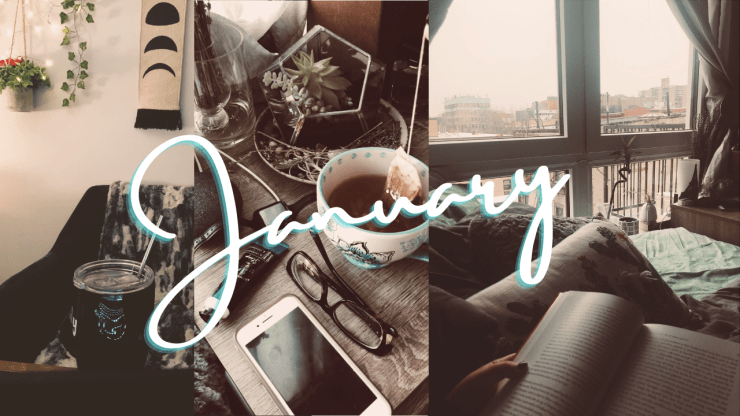
Immortalizing the Days: January

2020 was such a whirlwind of a year… so much loss and growth, the change nearly incomprehensible in a year that felt stagnant and stuck in a limbo of, “When we go back to normal…” and “What is normal anyway?”

New Year’s Eve 2020, I found myself scrolling through social media, looking at everyone’s video compilations from the year, or declarations of how 2020 was somehow still their year. I found myself wishing I had some kind of visual diary that I could share with the world. I wanted a way to immortalize the days and remind myself that while each day seemingly blurred together with only a microscopic amount sticking out… I more than likely accomplished something, be it big or small, each day and that’s worth noting.

For 2021, I’ve decided to do two things in order to immortalize my days, so when the year comes to an end I have a physical reminder that not only did I do everyday, but everyday I felt, created, explored, cleansed, and consumed.

The first thing I’ve done is downloaded this app called 1 Second Everyday where I upload a little snippet of 1-1.5 seconds. It gave me a little thing to look forward to each day and was the little push on certain days to just do. Then it became fun evidence on the days where it seemed I didn’t do anything… that I did actually do something.

Here is what January looked like for me, I’d title it, “The Month of Chill Baby Steps.”

. . .

The next fun adventure in my immortalization trek, is something I came across somewhere on IG (I can’t trace back the origin unfortunately) but it was to create a Spotify playlist and add one song everyday. You already know how ya homegirl feels about playlists, so obvi I was so down for this I couldn’t make a playlist fast enough. Each song that I add everyday is either one that had been an earworm that day, or a new song that struck a chord with me, or a day that was so radical it was easy to find a song that perfectly embodied the day.

. . .

Feelings after experiencing my video and playlist on 1/31/21:

Playlist? LOVE. But I’ll be honest, when watching my January video, I felt a bit dejected. It felt so… boring and kind of sad to watch back through at the very end of the month. I didn’t travel anywhere, I didn’t really socialize much, why the heck did I want to immortalize the days again?! But as I re-watched several more times I picked up on the little things, the little accomplishments, the mini self adventures.

Five things learned in January:

  • Baby steps forward are better than no steps at all.
  • Avocados and bananas take ages to get ripe, but just seconds to go bad.
  • Invest in organization.
  • The saying, “Never dull your light to make someone else feel comfortable,” isn’t just for loud girls with big personalities – it’s also for women labeled bossy, introverted, stand-offish, etc… It means be who you are and when someone tells you to smile more or be less bossy, you literally don’t have to do that. Your bossiness, your steadfast nature, is you and that’s fine, great even. Block out the haters and be you, be comfortable.
  • Voicing an idea that gets rejected is better in the long run than withholding an idea in fear of rejection. It sucks when someone else thinks of that very same idea later down the road and poof, you lost an opportunity to shine.

. . .

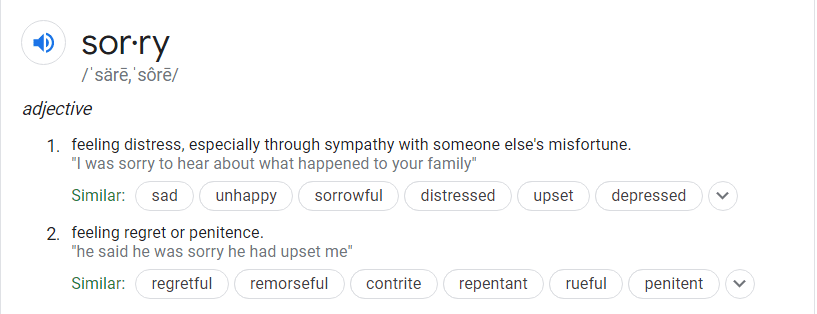
“I’m Sorry” Sucks

I have a weird relationship with the phrase, “I’m sorry.” Whenever I’m told to say it, or it feels “necessary” to say it… I don’t want to and a lot of times I flat out won’t (guess my zodiac sign.) The times I typically can be found saying sorry are when it’s unnecessary – i.e. when it makes no sense and adds zero quality points to a conversation or interaction.

But I’ve been on a mission for the last couple of years to evolve the whole “I’m sorry” phrase out of my vocab.

thorned rose : Want to get out of here? Mommy needs a drink....

Me to me:

Examples of some unnecessary “I’m sorry” phrases:

  • “I’m sorry for the delay!” -> try: “Thank you for your patience!”
  • “I’m sorry, but this isn’t what I ordered…” -> try: “Unfortunately, this isn’t what I ordered…”
  • “I’m sorry, but I was wondering…” -> try: “Excuse me, quick question…”
  • “So sorry I’m late!” -> try: “I seriously appreciate you waiting on me!”

Examples of necessary times to say “I’m sorry”:

  • Never -> If you did something wrong, figure out a better way to apologize. “I’m sorry” doesn’t cut it.

“I’m sorry” is a weak phrase.

It’s just a surface scratcher to something deeper and, to put it simply, a way to deflect. There is always something way better to be said in place of an “I’m sorry.” I mean, how many times has someone used that phrase and you actually felt better or you felt like it promoted a more positive tone to the environment? Saying, “I’m sorry” is a reactional “oof” to a situation. It conveys how uncomfortable you are and even your distress… in turn, causing you to lose your power.

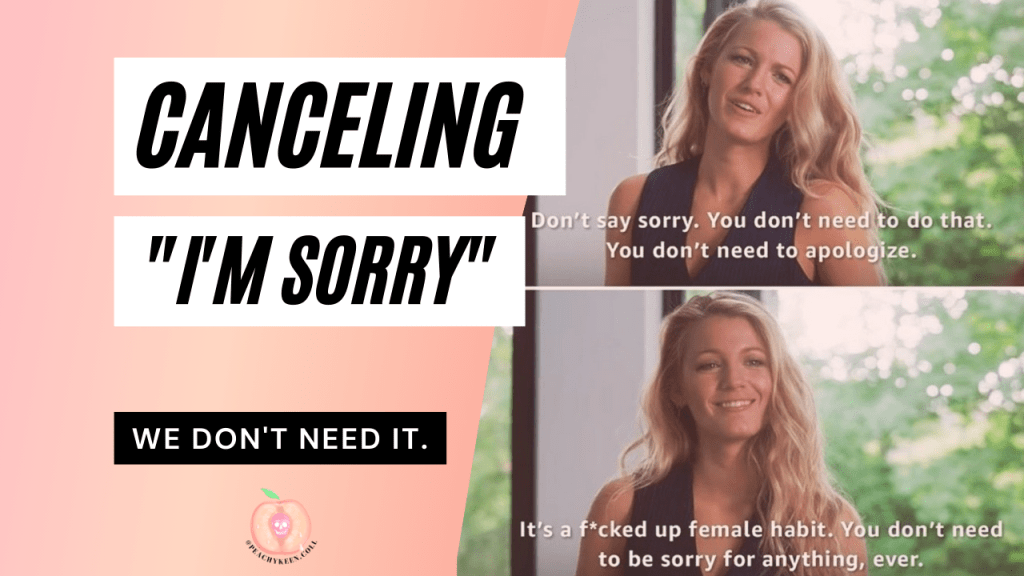
I’m not sure how one activates cancel culture but can we just get “I’m sorry” cancelled already?

Sure, this article might indeed be coming from a stubborn Taurus who will go above and beyond to avoid saying “I’m sorry,” but let’s seriously think about this. When has a simple sorry fixed anything? When has saying, “I’m sorry, I have a question” shown confidence?

The best apologies that change a situation are ones that come from the heart and are followed with action. And in turn, an aimless “I’m sorry” in email correspondence or for running late, etc. is useless. It’s useless because you’ve probably said “I’m sorry” so many times before that it has lost any and all sincerity it could have (maybe) once possessed. A little secret – the chronic apologizing also creates this weird mini pity party for yourself where the person on the receiving end feels the need to say, “Oh, no worries!” or some other response in an effort to try to make you feel better… and that’s kind of messed up.

As I mentioned earlier, I have a weird history with “I’m sorry.” I hate using it when I’ve done something that calls for an apology, usually getting away with an “I’m sorry you feel that way.” Which yeah, is not a real apology, but didn’t we already agree that “I’m sorry” is fake anyway you strew it? I’m a tragic half-assed verbal apologizer, but my real apology lies in my actions that follow the confrontation. (I know there should be a balance, but I’m working on it okay?!)

Now, in terms of the weird history I have of the “I’m sorry” overuse, I am still training myself out of over apologizing. I have come a long way, but there are still times when I’m writing up an email and have to actively catch myself and rephrase. Not to mention during face-to-face interactions, I’ll find myself at times biting my tongue to catch an “I’m sorry” and quickly rephrase what I had planned to say.

Deciding to change a behavior and actively implementing the change is an uphill battle, but it’s a gratifying one.

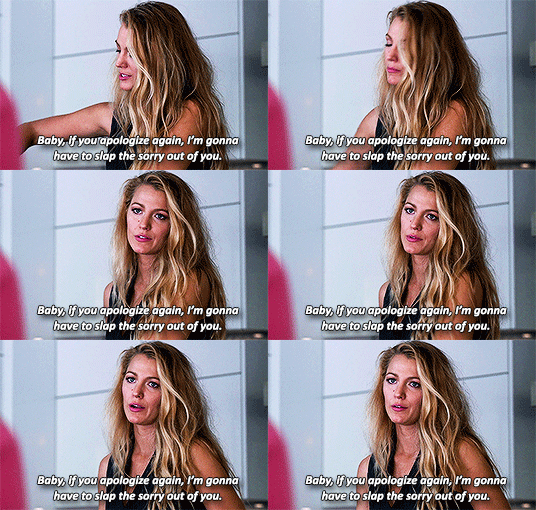
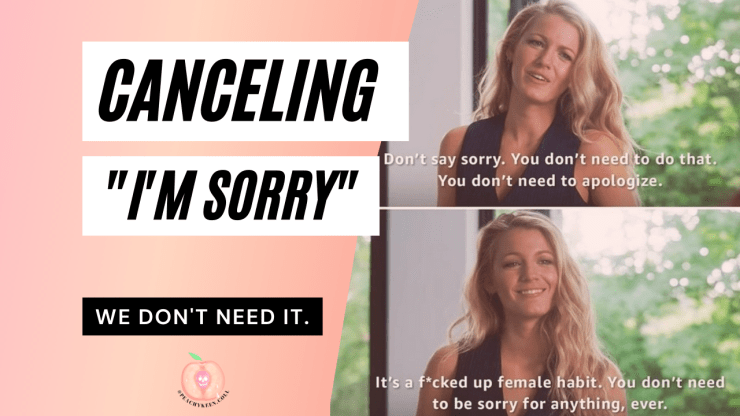
Blake Lively in “A Simple Favor”

Learning to Love Yourself as a Woman

Self-love is a feeling that most, if not all, women struggle to possess. In a society where we are constantly given mixed signals, it’s no surprise that we have a tough time loving who we are!

We have come a long way since our foremothers fought for the right to vote. Women are working hard everyday in professions that were only seen as “a man’s work” for centuries. We have the freedom to get an education and pursue any dream we have and if we want to be a stay-at-home mom, then we can be! But we don’t have to be. Hell, we even have a WOMAN IN THE WHITE HOUSE (btw, happy inauguration day, Madame Vice President)!
However among this growth, we women still have a long road ahead of us to equality and fairness. Yes, on the outside we are equal, but in reality we are given subtle reminders that we are never good enough. These hidden messages, mostly through media, are why it is so hard for women to fully love themselves.

Let’s first look at the most obviously critiqued area of a woman’s life: her appearance. TV commercials, magazine ads, Instagram models and even Hollywood stars send women everywhere a message that we are not enough. We’re told that we aren’t skinny enough or pretty enough or that our hair isn’t shiny enough and our pores are too big, but our boobs are too little. Then, we’re reminded that confidence is the sexiest quality we can have, so just be confident in your own looks. How are we supposed to be fully confident in what we look like when we can never live up to the perfection we see on television? If we can never find love unless we love ourselves first, then how will we ever find love?

This leads me to my next point: our love lives. Even though we are beyond the time of dowries and old maids, it seems like these values are still somewhat etched into the minds of society. We’re told to focus on growing our career and being happy with ourselves before we find love, but when you’re still single in your late twenties as a woman and watching your friends on Facebook settle down, it’s hard not to think, “I’ll be alone forever…with a fantastic career.”

Whether we like to acknowledge it or not, women who want to have children kind of DO have a biological clock ticking in the back of their minds. So it’s challenging to not freak out every time we see another Instagram wedding hashtag and download every dating app that exists, even though we deleted them all 3 months ago because they sucked. Then it’s a downward swiping spiral, full of overthinking and “playing it cool” because being honest about what you want will make you look crazy (because women are too emotional, of course) and men don’t want an overly eager woman because they just want to keep things “casual” BECAUSE MEN DON’T HAVE A BIOLOGICAL CLOCK. After swiping for months and being ghosted by 4 more “cool and casual” guys, we give up, delete the apps again, and tell ourselves we’ll be alone forever unless we learn to love ourselves.

And the cycle continues.

Ladies, self-love seems like an impossible feat. I’m currently struggling with this myself, so I’m no expert by any means. However, these are some things I’m doing (thanks to my therapist) that are actually quite helpful.

1. Negative Self-Talk: Catch it. Check it. Change it.

I’m so used to insulting myself that it doesn’t always occur to me when I’m doing it. I remember in my mid-year review at work last year, I had to do a self-reflection and write some “glows” and “grows.” After my supervisor read through the long list of grows I gave myself compared to the 2 or 3 glows, she said something along the lines of, “wow, you really kicked your own ass here.” The crazy thing is, I truly had been telling myself “I suck at my job” for so long that I couldn’t think of anything good to write about my performance at work.

I called my AA sponsor that day and she told me a catchphrase that everyone needs to hear and put into good use: Catch it. Check it. Change it.

Catching it, that’s step one. Pay attention to how you talk to yourself more closely. Catch yourself when you’re getting into a negativity rant. Notice it. Acknowledge it. Before anything can be fixed, it must first be recognized as a problem. From there, I wasn’t sure where to go next.

I spoke to my therapist later on about it and he gave me some awesome advice. He said, “Whenever I hear that negative voice in my head telling me I can’t do anything right, I tell it, ‘I’d like to see YOU f***ing try it!’ I laughed so hard, because it’s like you’re having an argument with yourself, but then one day I actually did it. I was so empowered. Then, every time I noticed my negative voice telling me I’m ugly or stupid or worthless, I started arguing back with retorts like, “You’re ugly, negative nancy” or “I know you are, but what am I?” or the simple and satisfying, “F*** off, asshole!”

Let’s face it, your inner negative voice is an asshole. How do we treat mean people in real life? We either ignore them and be the bigger person, or we tell them off. I’m a New Yorker at heart, so I choose the more aggressive method. It always works. Once you notice your negative voice being an asshole, check it.

The last part of this sequence, change it, seems like the hardest part. However, once you get a hang of stopping your negative voice in its tracks and telling it to shut up, you gradually begin to see a change in your thought patterns.

Imagine that your confidence is living in an apartment in your mind. At first, your negative voice is like an annoying roommate that eats all the food in the apartment and never leaves your confidence alone. Doing the “catch it” and “check it” steps is kind of like, helping your confidence kick the negative voice out of the apartment. That negative voice will always be around, though, because it only moved in next door. Now when it comes knocking, your confidence can more easily keep the door shut to it. Does my extended metaphor make sense?

2. Positive Affirmations

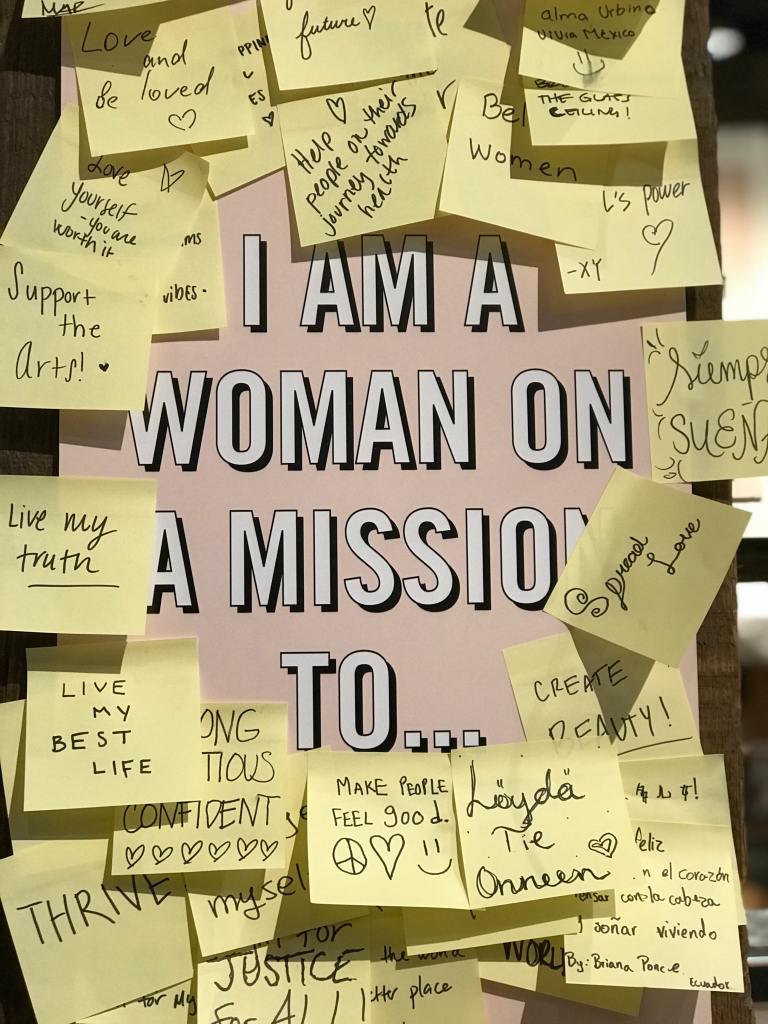
I get it, this sounds dumb and you assume it won’t help your self confidence. I always felt that way…until I tried it. Here’s how I went about this. The first day, I wrote out 3 compliments to myself that I already sort of believed to be true on sticky notes and stuck them to my mirror. Then, when I looked in the mirror, I read them out loud. Everyday, I’ll add one new compliment to my mirror. When I feel like I 100% believe the compliment, I’ll take it down. But I’ll never leave my mirror empty.

My best friend does something else that I think is really cool. She has a whiteboard on her door with three reminders to look at everyday. She has the categories “one thing I’ll accomplish today,” “one thing I’m letting go of” and “one thing I’m grateful for.” She changes the first and third everyday and leaves the second one up until she feels like she’s moved on with the thing that’s bothering her. It’s a simple and affective way to affirm your worth everyday!

3. Setting Intentions

Every morning, I have to set my intention for the day. If I forget to do this, I find myself irritable and negative all day. For me, setting my daily intentions comes in the form of a “prayer.” I’m not religious, but I’m very spiritual and I trust the universe. So my prayer is to what I call “Lady Universe” or “Mother Earth” or even my higher-self or passed loved-ones. I always ask for things to be taken away and replaced with its positive opposite. These are my usual 2: “Take away my dread and replace it with motivation” and “Take away my fear and replace it with gratitude.” I’ve recently added, “Take away my self-doubt and replace it with self-love.” I’ll repeat those intentions in my head until I feel ready to get up and start my day. It always makes my day better!

If you feel uncomfortable praying, you can just as easily repeat your intentions in your head without addressing it to some higher power.

This can be hard to remember when we’re busy. I wrote a sticky note and put it inside my laptop so I see it and make sure I “pray” or “meditate” before I start working.


We women are incredible, even if we don’t realize it about ourselves everyday. Whether you try out my methods or think of your own ways to practice self-love, it’s so important to keep yourself first, but not because loving yourself will make others see you as confident and maybe love you more. It’s important to love yourself because you are worth it.

The Subtle Art of Not Giving a Duck

Recently I read Mark Manson’s book, The Subtle Art of Not Giving a F*ck: A Counterintuitive Approach to Living a Good Life. I practically inhaled the book in just a few short days, and honestly I’m shook. I’m still trying to wrap my head around what I read, because I devoured it like a bomb burrito – so quickly I didn’t even really comprehend what parts of the burrito were actually the game changers, what I should factor in to my next burrito creations.

(I’ve been on a burrito making kick recently, so bare with me on this analogy.)

But alas, some things clearly stick subconsciously. For example, when trying to recreate my bomb burrito, my hand reached for garlic powder out of reflex, and it was in that moment it clicked that I had put garlic powder in that burrito last time on accident… but it was bomb. And then today, I was scrolling on my Facebook timeline and some people from high school were getting too personal (again). It was so annoying, I was two seconds from sending screenshots to one of my friends so that we could essentially poke fun at these people… but then I took a pause and thought, “Who gives a duck. They want to post this, that’s their business – no need to make it mine.” I then went about my business, sans screenshots, sans gossip, sans ducks.

Hehehe GIF by memecandy - Find & Share on GIPHY

Here is when it clicked – the book did something! I’m actually listening to Mark Manson’s advice, whether I realized it or not – yay! Cheers to growth, motherduckers!

Ultimately, Mark’s book wasn’t about not giving a duck about anything and living a carefree life, it was quite the opposite. It centered around the fact that you have to give a duck about things, but you should be selective and thoughtful with your ducks. In turn, this thinking then enables you to think about problem solving differently – what do you truly give a duck about? Why do you give a duck? Does it make sense to give a duck?

Question every problem you have like you’re a child aka – “But why?” yourself into oblivion.

It’s stripping down a problem to such bare bones, that you can then face the root of the issue, the true reason why you’re giving a duck. Nine times out of ten, when you strip down a problem like that, you’ll realize how dumb it actually is and how you’re probably responsible for the problem itself. Actually, Mark will tell you that you are responsible for your problems – every single one of them… but that’s a whole other topic.

Anyway… when you start stripping down problems, a realignment of priorities and values can take place. This enables you to shift your outlook and erase pointless problems. Next thing you know, you’ll find yourself actively withholding your ducks from things that no longer align with you. And trust me when I say you will feel really good about that.

Overall, if you’re looking for a read that will give you a bit of a wakeup call, something that will challenge your comfortable way of thinking… You’ve gotta get your hands on this book ASAP.

“The desire for more positive experience is itself a negative experience. And, paradoxically, the acceptance of one’s negative experience is itself a positive experience.”

Mark Manson, The Subtle Art of Not Giving a F*ck: A Counterintuitive Approach to Living a Good Life

. . .

I Made a Vision Board for 2021: Part Two

As promised, here is part two of making vision boards for 2021. If you haven’t read part one already, go ahead and check it out now!

I Made a Vision Board for 2021 and Here’s How it Went: Part One


What is included in a vision board?

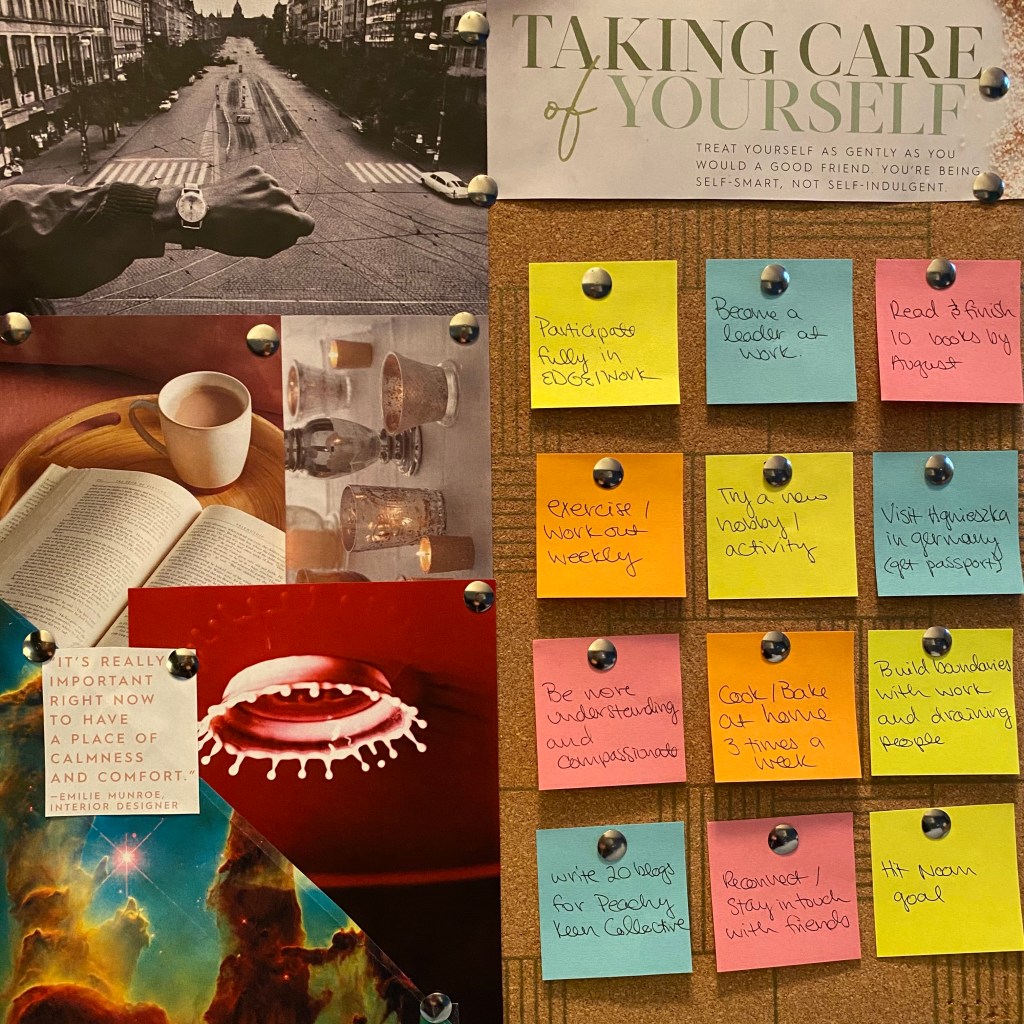
It can be anything you want. There are a few different ways to go about building a vision board, so truly there is no wrong answer. I made two – one for general ideation and one for specific goals. For the second board, focused around goals, I kept it simple. I added twelve goals to achieve throughout the year as well as imagery to help manifest that.

How does it work?

Vision boards serve as a physical reminder for what you’re wanting to achieve. Seeing it everyday will help keep your goals or ideas at the forefront of your mind as you progress through the weeks and months. It can help to motivate you in a passive way. Rather than an obnoxious alarm on your phone or a calendar reminder, you can be met with a peaceful, self-created image that hangs on your wall as a friendly notice.


Here’s my vision board, broken into two segments: imagery and goals.

Left – Imagery 

Since this board is dedicated to goals, I didn’t want to overcomplicate or clutter it. I cut images from magazines that showcased what I wanted to emulate to help achieve these goals – a watch for time, candles and coffee for relaxation and focus, the galaxy as a corny way to ‘reach for the stars’, an upside down drop to symbolize change and a quote. More than anything I wanted the imagery to exude calmness and growth.

Right – Goals

Writing out goals was the hardest part of this board. Even though I am someone who is hyper-aware and anxious constantly, I am not someone that has a life plan. I tried to focus on things that were not so far out of reach, but could be tangible with a little hard work. I used the categories of play, health, work and joy to establish my goals; these are based off of the teachings in Designing Your Life. By grouping these items you’re more easily able to see areas in your life that may need extra attention. 

Remembering Dreams: Why Some Do, But Others Don’t

I think my last article may have expressed it best – I’m obsessed with dreams. I love interpreting them, finding the hidden meanings, deciphering messages from my higher self, and sometimes even messages from family members who have passed. Very rarely, do I wake up and not have 1-3 dreams to recall, separate, and decipher.

Growing up, my friends and family had been the same. One of my aunts had a dream journal she kept, my nana gifted me a Dreamer’s Dictionary when I was young – essentially, I’ve always thought it to be normal that people always dream and remember most of their dreams. But of course, this isn’t the case. It wasn’t until college when my roommate casually mentioned she doesn’t dream – well she does, but she doesn’t remember them – ever. I remember being in shock and thinking, “What a boring night’s sleep you must have!”

It wasn’t until yesterday that I realized she wasn’t an anomaly.

Yesterday, I took a quick poll of our Instagram followers to see how many people remember their dreams – this was in an effort to send them to our post, and in the comments ask us what their dreams could mean. I had assumed most people would of course remember their dreams!

But nope.

Most of our followers don’t remember their dreams each night!

. . .

This sent me into a frenzy. I thought my college roommate was on the rare spectrum in terms of dream recollection, but it turns out I’m a bit more on the weird side of things. So how does this work? What sets “high recallers” like me, apart from the “low recallers” like my college roommate?

Factors that can play into dream recall:

  1. Amount of REM sleep

Mental Floss says, “People dream every 90 minutes during the REM (rapid eye movement) sleep cycle. However, those REM periods get longer throughout the night, meaning that you’re doing the most dreaming toward the morning — generally right before you wake up. If you only sleep four hours instead of eight, you’re only getting about 20 percent of your dream time. For this reason, some people report remembering more of their dreams on the weekend, when they have the chance to catch up on sleep.”

2. Personality traits

Various studies show that people who are more psychologically-minded and prone to daydreaming, creative thinking, and introspection tend to more frequently remember their dreams compared to those people who are more practical and focused on what is outside themselves.

. . .

3. Brain activity

A study in 2014, demonstrated that high recallers and low recallers ultimately use their brain differently when in a resting state. More specifically, high recallers have increased activity in their TPJ and mPFC which could be shifting their attention towards external stimuli and promote intrasleep wakefulness. Making high recallers more apt to encode their dreams in memory.

  • What the heck is TPJ?
    • TPJ stands for temporoparietal junction, and it’s a brain region that is important for numerous aspects of social cognition; such as perspective taking, language, motor control, mental imagery, episodic memory retrieval, and attention orientation.
  • And mPFC?!?
    • mPFC stands for medial prefrontal cortex and it’s up in the air what exactly (exclusively) it does, but it is typically active during tasks of cognitive empathy and perspective-taking. Some additional functions of the mPFC include mediating decision making, it’s selectively involved in the retrieval of remote long-term memory, mind representations, evaluations, supports memory and consolidation on time-scales ranging from seconds to days.

. . .

4. Response to external stimuli

Since high recallers have increased activity in TPJ and mPFC, this leads to them waking up a bit more frequently throughout the night compared to low recallers. It’s perfectly normal to wakeup throughout the night and quickly fall back asleep, but low recallers typically only wake up 15 minutes total throughout the night, whereas high recallers will have anywhere from 30 minutes to a full hour of waking up and falling back asleep periodically.

Waking up throughout the night is typically as a response to external stimuli, such as a neighbor bumping your shared wall, a car horn blaring, or maybe even softer noises like the wind or snowfall. High recallers are more apt to respond to these noises throughout the night (knowingly or not) and when woken up mid-dream, the brain is able to better commit that dream to long-term memory in that moment.

In an interview with Mental Floss, Dr. Deirdre Leigh Barrett, a psychology professor at Harvard Medical School and author of The Committee of Sleep, says there could even be an evolutionary explanation for essentially being a light sleeper: “Evolution wants us to get restorative sleep but it also wanted us to wake up to danger and check it out and be able to go back to sleep quickly afterwards,” she says. Think of the all the dangers our prehistoric ancestors had to deal with, and it’s clear that this response is important for survival. In essence, high recallers are “probably just a little more aware and watching during their dream, and that helps make it a long-term memory.”

. . .

Dreams are fragile things that are born in your short term memory, the people who more frequently remember dreams are able to commit them to long-term memory simply because they want to.

Dreams are fragile, but the science behind all of it is even more fragile. Sure, brain imaging shows the different parts of the brain that are more active for some and less active for others, but if personality traits can play such a common (and large) role in remembering dreams… maybe if you set the intention before you sleep, that you wish to remember a dream… perhaps a dream will be remembered the next day. Ultimately, becoming more introspective and asking yourself, “Why don’t I remember my dreams?” could turn you into a high recaller 😉

. . .

Sources: Mental Floss, NCBI, Live Science, Healthline, Science Direct